
From Checklist to Culture: Reflections on Food Safety Culture from IAFP 2026

The 2026 International Association for Food Protection Annual Meeting in New Orleans brought together a broad food safety community across research, regulation, industry, auditing, training and professional practice. For the Food Safety Culture Lab, it was more than a conference. It was a window into how thinking about food safety culture is continuing to evolve.
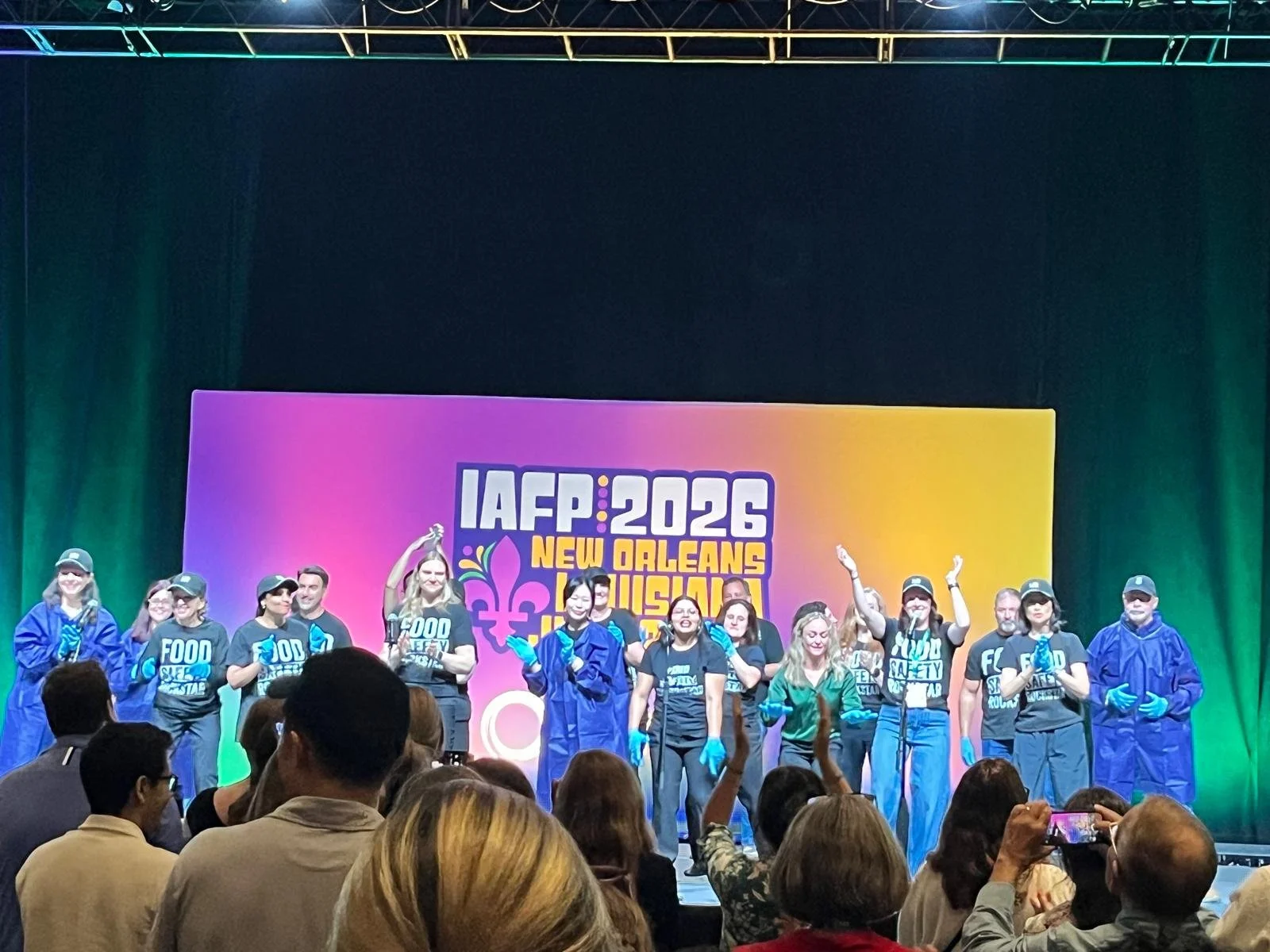
The meeting was full of energy: new ideas, challenging conversations, cross-disciplinary connections, and even an unexpected and memorable Food Safety Choir. One line from the choir captured a serious message in a light-hearted way: “Culture’s not a checklist, it’s the heart and soul we share.”
That message sits close to the heart of food safety culture research. Food safety culture cannot be reduced to a checklist. It is not a folder prepared before an audit, nor an additional task placed beside daily operations. It lives in how organisations work, how people communicate, how risks are noticed, how concerns are raised, and how people support one another in everyday practice.
📋 From Audit Preparedness to Everyday Readiness
As food safety culture becomes more visible in standards, audits and industry expectations, a new risk also emerges. If culture is treated simply as another requirement, it can easily fall back into checkbox audit mode. Instead of strengthening learning and improvement, it may become something to monitor, prove and complete.
The more important question is therefore not only whether an organisation has a food safety culture assessment. It is whether food safety culture has entered everyday work. Does it shape how people ask questions, raise concerns, respond to pressure, report problems and learn from vulnerability?
This also asks us to rethink the purpose of audits. Internal audits should not only be a way to show that “we passed”. In a more mature food safety culture, audits can become a risk-intelligent asset. Finding a weakness should not automatically be seen as failure. It can be evidence that the system is still able to sense risk, reveal problems and open the door to improvement.
A system that never finds anything may not be a strong system. It may be a system that has lost some of its ability to see.
Moving from audit preparedness to everyday readiness is therefore an important shift. Audit preparedness asks whether an organisation can be ready at a particular point in time. Everyday readiness asks whether the organisation is continually able to recognise risk, respond to it and turn what it finds into learning.
👁 Seeing the Human System and the Signals of Behaviour
One of the strongest messages from IAFP 2026 was that food safety remains deeply human-driven. Standards can set expectations. Procedures can provide structure. Audits can identify gaps. But food safety is protected through the ways people understand these requirements and continue to act on them in real working conditions.
This is why support systems around people matter. Discussions around the MACK framework reminded us that Knowledge is only one part of the picture. Motivation, Awareness, Capability and Knowledge all influence whether food safety expectations become action. Motivation, in particular, is often the element most easily overlooked.
Frontline supervisors also play a crucial role in food safety culture. They often sit between standards, production pressure and team practice. They are the bridge through which food safety expectations enter everyday work. If supervisors lack support in management, communication and people skills, it becomes much harder for teams to build stable and sustainable safety practices.
Food safety culture therefore cannot only ask whether frontline workers are “doing the right thing”. It must also ask whether organisations are providing workers and supervisors with the conditions, confidence and support that make safe practice possible.
This leads to another important question: how do we know when food safety culture is becoming part of everyday work?
Complaints, recalls and non-compliances are important, but they are largely lagging indicators. A more forward-looking approach to food safety culture needs to pay attention to earlier, smaller and more everyday signals of behaviour. Are people discussing risk? Are they willing to report problems? Do food safety topics appear regularly in meeting minutes? Do HACCP discussions include behaviour and decision-making? Do teams have spontaneous conversations about safety?
These signals may not always be obvious, but they may bring us closer to the real state of culture. Culture is often not most clearly visible when managers are watching. It appears in the natural flow of everyday work.
💡 Helping Food Safety Come Alive in Organisations
In this sense, food safety culture is moving into a more practice-oriented stage. It is no longer only a question of values, attitudes or survey results. Nor is it only about whether an organisation has a culture plan. Increasingly, it asks how organisations understand risk, manage risk, support people, develop supervisors, use meaningful indicators and embed food safety into broader operational risk thinking.
For the Food Safety Culture Lab, these discussions reaffirm an important direction for our work. Food safety culture must connect evidence with practice, organisational systems with human behaviour, and formal requirements with everyday work. Our interest in the human side of food safety is not about placing responsibility only on individuals. It is about understanding how safe practice is supported, learned and sustained within real organisations.
Change in food safety culture is often quiet. It may happen in an internal audit where a weakness is taken seriously. It may happen when a supervisor supports a worker to speak up about risk. It may happen when a team is willing to challenge the phrase “we’ve always done it that way”. It may happen when an organisation treats vulnerability as a starting point for learning, rather than as evidence of failure
What IAFP 2026 brought back was not only notes, photographs and action points. It brought back a clear reminder: culture is not a checklist. Food safety culture is not another task. It is the way food safety becomes alive within an organisation.
It may begin with compliance, but it cannot end there. It needs human engagement, organisational learning, leadership understanding and daily support.
This is where food safety culture moves from concept to practice, from standards to action, and from checklists to shared care.
2026 | 08 | 07
Food Safety Culture · IAFP 2026 · Human Behaviour · Auditing · Practice
Drawing on conversations and insights from IAFP 2026 in New Orleans, this piece reflects on what it means for food safety culture to move beyond formal assessment and become part of how organisations notice risk, support people, learn from weakness, and sustain safe practice in everyday work.