
From Interview Evidence to Action: AI-Assisted Food Safety Culture Assessment at CIFSQ 2026
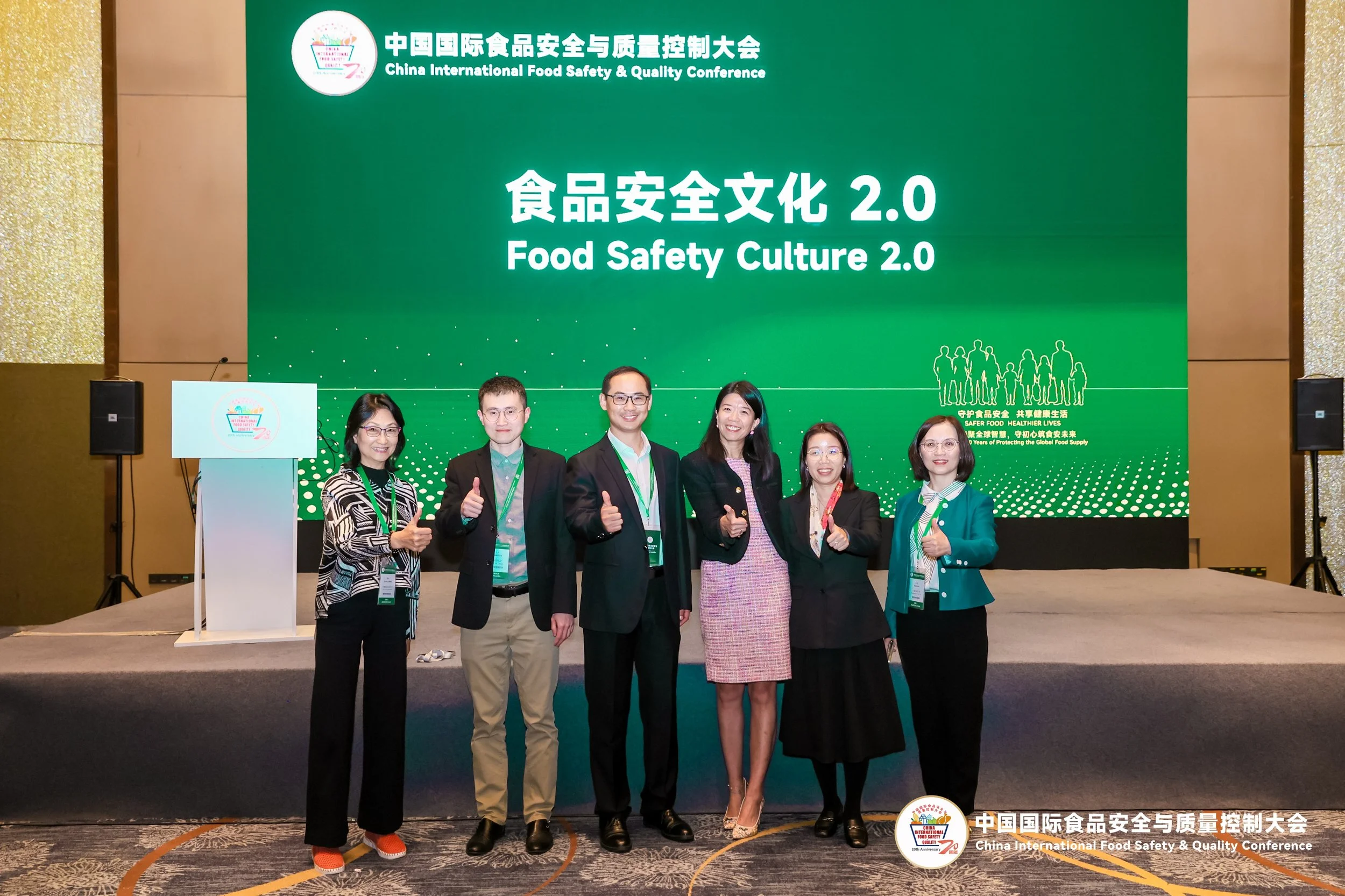
At CIFSQ 2026 in Shanghai, food safety culture was no longer discussed simply as something organisations should “have”.
The conversation had moved on.
Across the conference, the emphasis shifted towards measurement, evidence, data, and action: how culture can be assessed more meaningfully, how insights can move beyond audit findings, and how emerging technologies might support earlier and better-informed decisions.
This direction was captured particularly clearly in the conference theme Food Safety Culture 2.0, which brought together perspectives on updated assurance requirements, leadership, continuous improvement, data analytics, operational habits, and new approaches to culture assessment.
Against this backdrop, Food Safety Culture Lab PhD candidate Ke Wang presented:
Development and Validation of an AI-driven Workflow for Food Safety Culture Assessment Using Interview Transcripts
Making Qualitative Evidence More Usable
Interviews can reveal nuances that questionnaires and audit records often cannot.
The challenge comes afterwards.
Rich qualitative data takes time to analyse, and decisions about which evidence matters, where it belongs, and what it means can vary between assessors.
Ke’s research addresses this point directly.
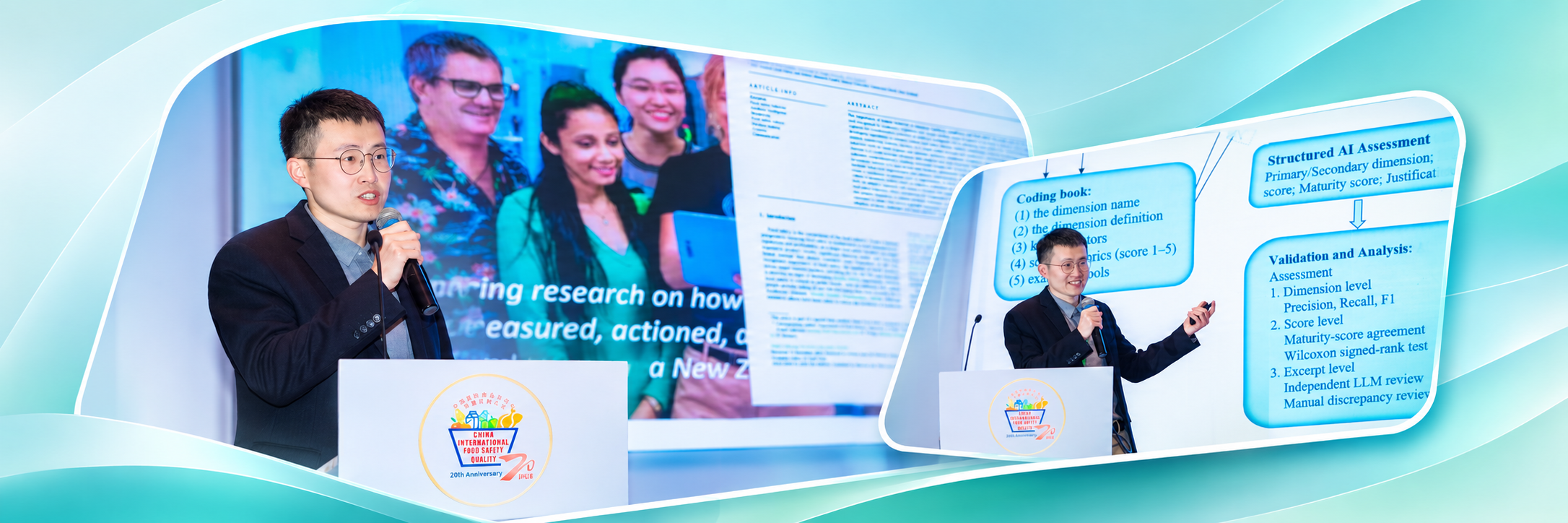
The workflow uses a two-stage process. Interview evidence is first classified against predefined FSC dimensions, and then evaluated against maturity criteria. Each assessment remains linked to the original excerpt, with fit scores and explanatory rationales retained for review.
The result is not simply automated scoring.
It is a structured evidence trail.
That distinction is important.
For AI-supported assessment to be genuinely useful, speed alone is not enough. The reasoning behind an output must remain visible enough to interrogate, compare, and challenge.
A Broader Shift at CIFSQ 2026
Ke’s presentation also sat at an interesting intersection within the wider CIFSQ programme.
AI was discussed across the conference in areas ranging from predictive risk management and intelligent hazard prioritisation to end-to-end quality management and incident response. At the same time, Food Safety Culture 2.0 repeatedly returned to measurement, governance, behaviour, and the movement from compliance towards everyday practice.
Bringing those two conversations together creates a different question:
Can intelligent tools help us work more effectively with cultural evidence, rather than simply generate more data?
For FSC assessment, that distinction matters.
The opportunity is not to automate interpretation out of the process, but to make complex qualitative evidence more traceable, comparable, and usable while preserving the contextual judgement needed to understand what that evidence actually means.
Validation Matters More Than Novelty
One of the strongest features of the work is that the AI-generated assessments were not considered in isolation.
They were compared with an established manual assessment at the score, dimension, and excerpt levels, followed by independent evidence evaluation and analysis of where the two approaches disagreed.
Those discrepancies were particularly informative.
Rather than pointing towards a simple contest between machine and human assessment, they revealed different strengths. AI offered greater consistency and systematic processing. Human assessors contributed broader contextual interpretation and retained responsibility for the final judgement.
This is perhaps the more interesting direction for AI in food safety culture assessment.
Not replacing expertise.
Making expertise easier to apply consistently, transparently, and at scale.
From Research Question to Working Method
This work also marks an important progression in Ke’s research.
Earlier work explored where AI might contribute to food safety behaviour and culture. The research presented at CIFSQ 2026 moves beyond that conceptual question by building and validating a concrete assessment workflow.
That movement from possibility to method is significant.
Emerging technologies become useful when they survive comparison, scrutiny, disagreement, and validation.
For us, that was one of the most valuable messages to emerge from Shanghai.
The future of AI in food safety culture may not be about asking machines to make better judgements than people.
It may be about building better systems through which evidence and judgement can work together.
2026 | 11 | 05
CIFSQ 2026 | Shanghai | 28–29 October 2026
Food Safety Culture · Artificial Intelligence · Assessment · Qualitative Evidence · Validation · Research Translation