

From Systems to Culture
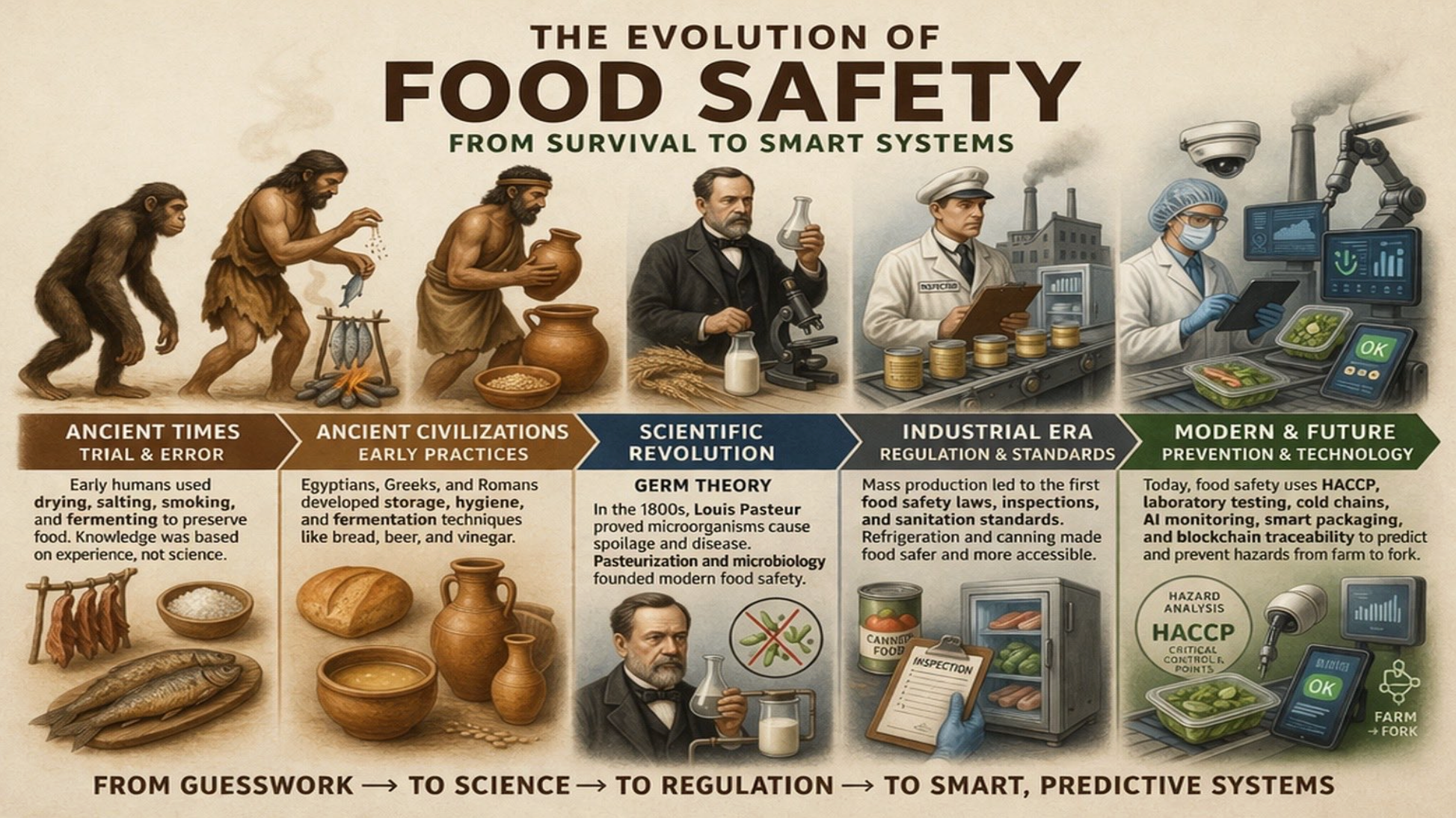
The evolution of food safety: From survival to smart systems
AI-generated figure
A Changing View of Food Safety
Historically, food safety has been advanced through scientific discovery, technological innovation, and the development of regulatory systems. From early preservation methods to modern frameworks such as HACCP, the field has progressively strengthened its capacity to identify, control, and prevent hazards across the food chain.
In spite of all of the historical and more recent developments in food safety, cases of foodborne illness continue to occur.
This raises a critical question: why do failures still happen in systems that are scientifically robust and tightly regulated.
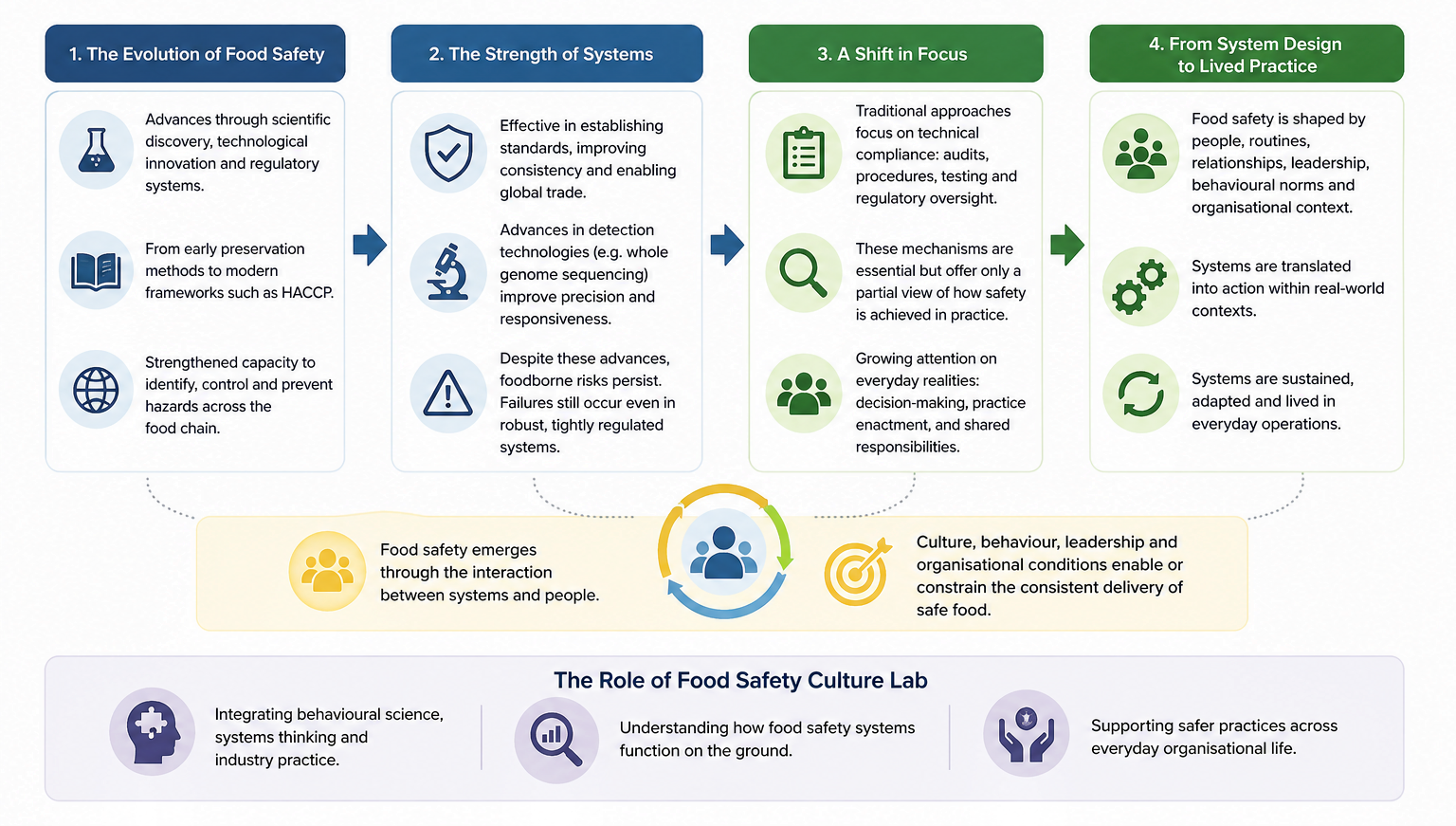
From systems to culture: Understanding food safety in practice
AI-generated figure
A Shift Toward Everyday Practice
It is becoming increasingly well recognized that food safety is not sustained by systems alone. It is shaped by people, routines, relationships, leadership, behavioural norms, and the organisational environments in which work takes place.
Increasingly, attention is turning to the everyday realities of food systems: how decisions are made, how practices are enacted, and how responsibilities are understood and shared across organisations.
From System Design to Lived Practice
The consistent production of safe food requires moving beyond formal structures and functions to examine how food safety is translated into action within real-world contexts. It means understanding not only how systems are designed, but how they are sustained, adapted, and lived in daily operations.
The Role of Food Safety Culture
The Food Safety Culture Lab focuses on the interaction between systems and people, exploring how culture, behaviour, leadership, and organisational conditions enable or constrain the consistent delivery of safe food.
By integrating insights from behavioural science, systems thinking, and industry practice, we aim to better understand how food safety systems function on the ground, and how safer practices can be developed, supported and sustained.