
This week, the Food Safety Culture module welcomed four guest speakers from diverse disciplines, engaging students in a shared exploration of how safety culture is understood, shaped, and enacted in real organisational settings. The sessions centred on a common question:what food safety culture actually looks like in practice? Drawing on perspectives from workplace health and safety (WHS), systems thinking, workplace commitments, and ethical leadership, the lectures connected theoretical insights with the realities of food safety practice.
From Systems to Culture: Guest Lectures Exploring the Practice of Food Safety Culture
1. From Individual Blame to System Understanding: Rethinking Safety Culture
Associate Professor Lynnaire Sheridan opened the series by inviting students to reconsider how safety culture is understood. From a WHS perspective, she highlighted the limitations of attributing failures solely to individual error, noting that such explanations often obscure deeper systemic issues. Safety, instead, should be seen as something produced through the interaction of organisational structures, safeguards, and everyday practices.
Using James Reason’s “Swiss cheese model”, the session distinguished between active failures and latent system conditions, illustrating how food safety incidents typically emerge from the alignment of multiple vulnerabilities rather than a single mistake. The discussion further emphasised that breakdowns in safety are frequently linked to weak management systems, insufficient risk assessment, economic pressures, and failures in communication and trust.
The lecture also incorporated Māori perspectives, highlighting that safety is not only a technical or managerial concern, but one that is continuously constructed and sustained through shared values, collective responsibility, and daily practice.
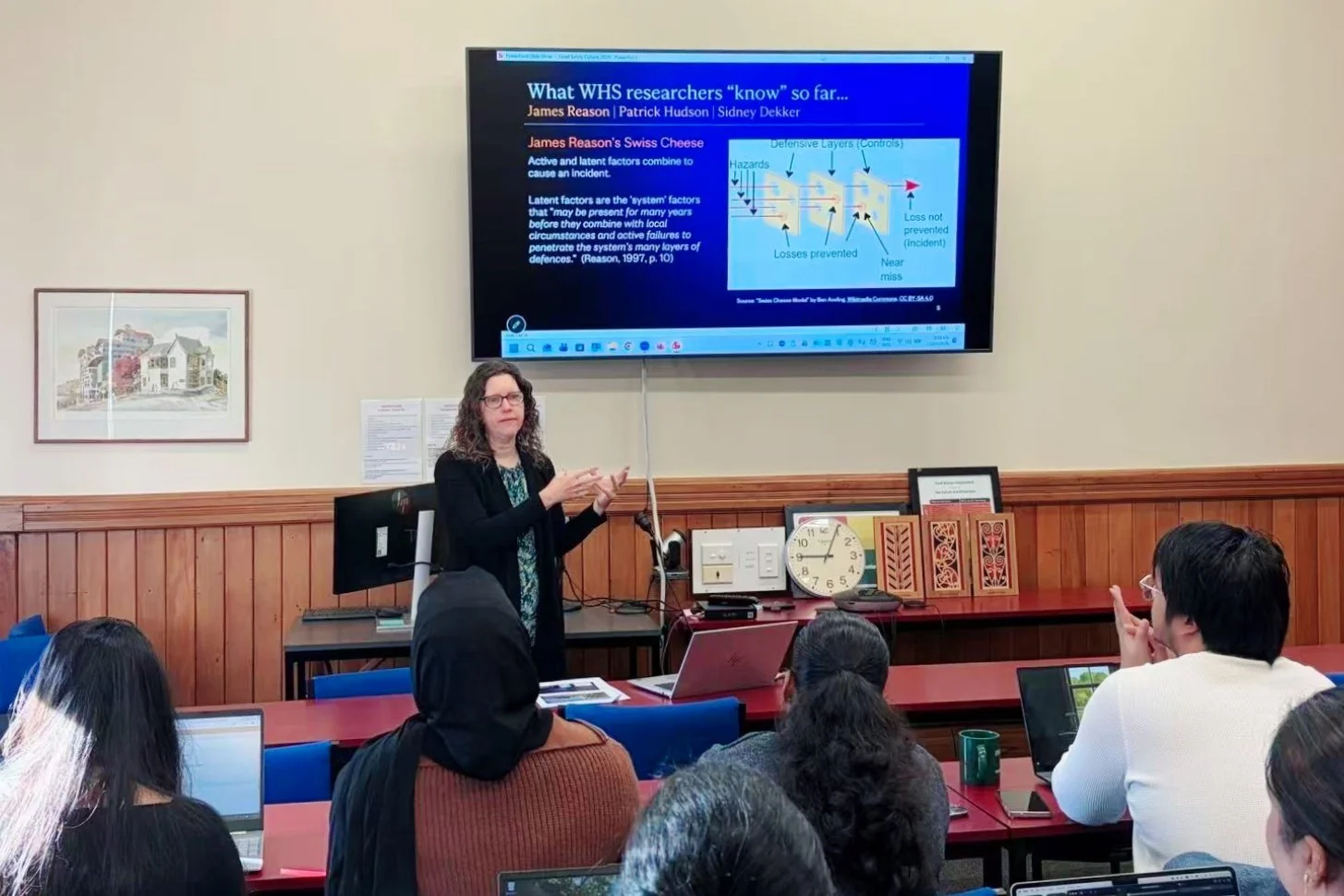
Figure 1. Associate Professor Lynnaire Sheridan introducing a systems perspective on safety culture, highlighting the shift from individual blame to systemic understanding
2. Acting in Complexity: The Value of Systems Thinking
Associate Professor Jeff Foote then shifted the focus towards the application of systems thinking in complex, real-world contexts. He noted that many contemporary organisational challenges exist within conditions of uncertainty, rapid change, and interdependence (often described as VUCA or RUPT environments), and that food safety issues are no exception. Such challenges resemble “wicked problems”, characterised by unclear boundaries, no definitive solutions, and interventions that may have irreversible consequences.
In response, systems thinking encourages a holistic approach: focusing on relationships between elements and integrating multiple perspectives, rather than addressing problems in isolation. The session introduced four core concepts for analysing complex situations: boundary, relationship, system (whole and part), and perspective.
Tools such as causal loop diagrams and feedback analysis were presented as practical ways to identify underlying dynamics, unintended consequences, and potential leverage points. In this way, systems thinking provides a structured means of navigating the complexity inherent in food safety practice.
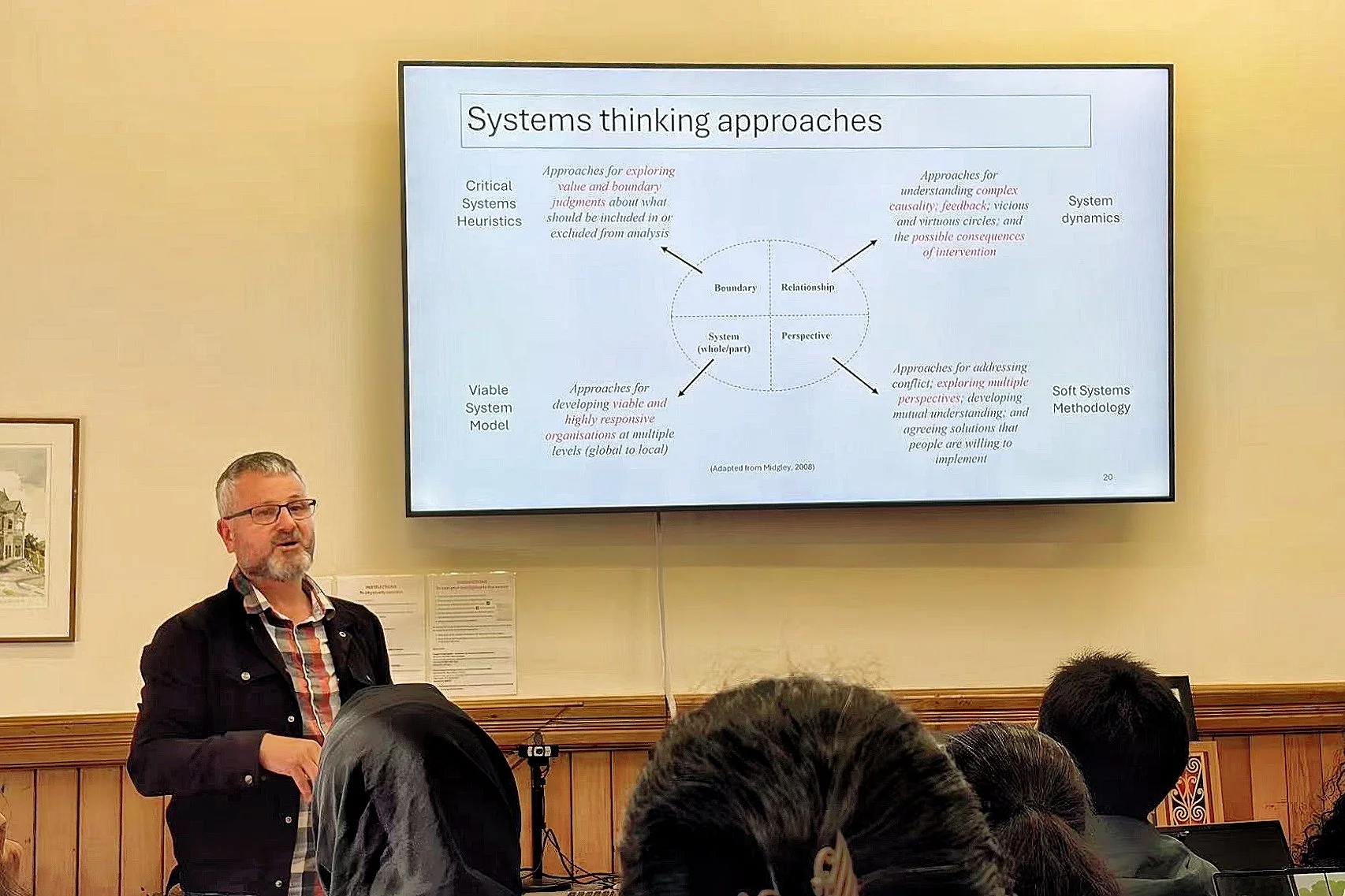
Figure 2. Associate Professor Jeff Foote introducing systems thinking approaches for analysing complexity, highlighting key concepts such as boundaries, relationships, and perspectives
3. Why People Truly Commit: The Role of Commitment Mechanisms
In the afternoon session, Dr Joe Cooper explored the role of commitment in shaping food safety behaviours. He emphasised that commitment is target-specific. Individuals in organisations are typically committed to multiple and often competing goals, such as productivity, team cohesion, and organisational expectations, where food safety may not always be prioritised.
The lecture examined several factors underpinning commitment, including social exchange (fairness and support), identity and value alignment, and self-interest. Together, these factors influence both the direction and intensity of individual engagement with specific goals.
Building on this, food safety culture should be understood as an ongoing goal system rather than a static condition. Commitment acts as a key moderator, translating cultural expectations into observable behaviour. Its strength is shaped by the perceived importance of the goal, individual self-efficacy, and the availability of feedback and support. From this perspective, failures in food safety are often not due to a lack of knowledge, but rather a failure to sustain commitment in the face of competing priorities. In other words, safe practice depends not only on knowledge, but on sustained commitment.
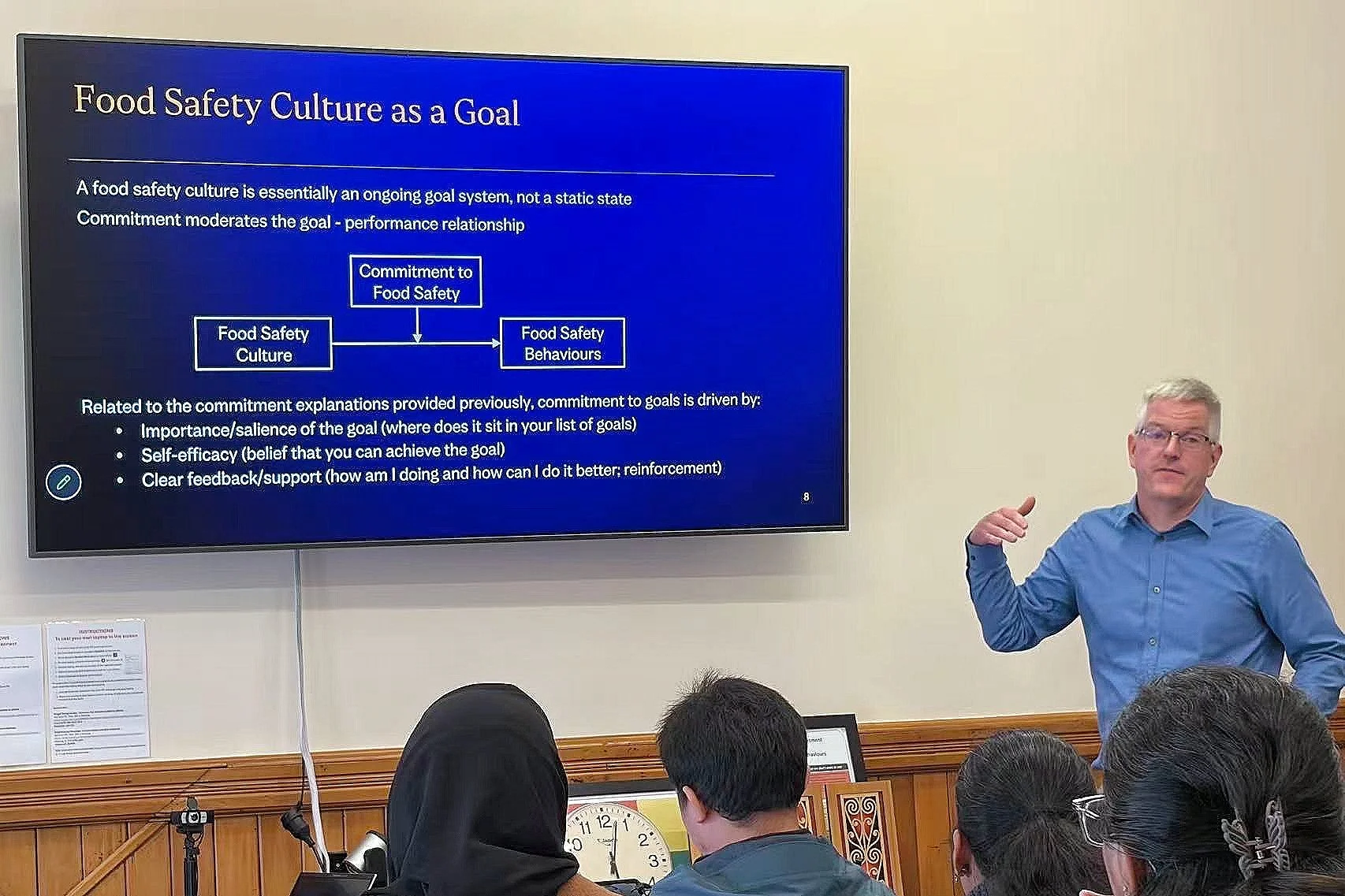
Figure 3. Dr Joe Cooper discussing commitment mechanisms in food safety, emphasising how competing organisational goals shape behaviour and how sustained commitment translates expectations into practice
4. Why People Do Not Act: Ethics, Integrity, and Speaking Up
The final session, delivered by Dr Wendy Newport-Smith, focused on integrity and ethical behaviour within food safety culture. She argued that food safety is not only a matter of systems and processes, but also depends on whether individuals are willing and able to act appropriately in critical situations.
Moral courage was presented as a multi-dimensional construct, supported by values, responsibility, risk tolerance, and concern for others and the public good. These factors shape whether individuals uphold safe practices, particularly under conditions of pressure or uncertainty. Wendy also drew on the experience of Louise Nicholas to show that speaking up is not only an individual choice, but can also be a critical starting point for organisational reflection and change.
At the organisational level, whistleblowing mechanisms and ethical leadership play a crucial role. Whistleblowing provides channels for raising concerns, while ethical leadership signals what behaviours are expected and accepted within the organisation. Together, they define the boundaries between silence and voice.
Importantly, Wendy highlighted that food safety complacency is rarely the result of not knowing what to do. Rather, it often reflects weakened ethical priorities and diminished sensitivity to risk. This point also resonates with the work of Frank Yiannas, which suggests that failures in food safety often emerge gradually as complacency increases and speaking up becomes weaker within organisational systems. Identifying and addressing these underlying factors is therefore essential for sustaining food safety culture over time.
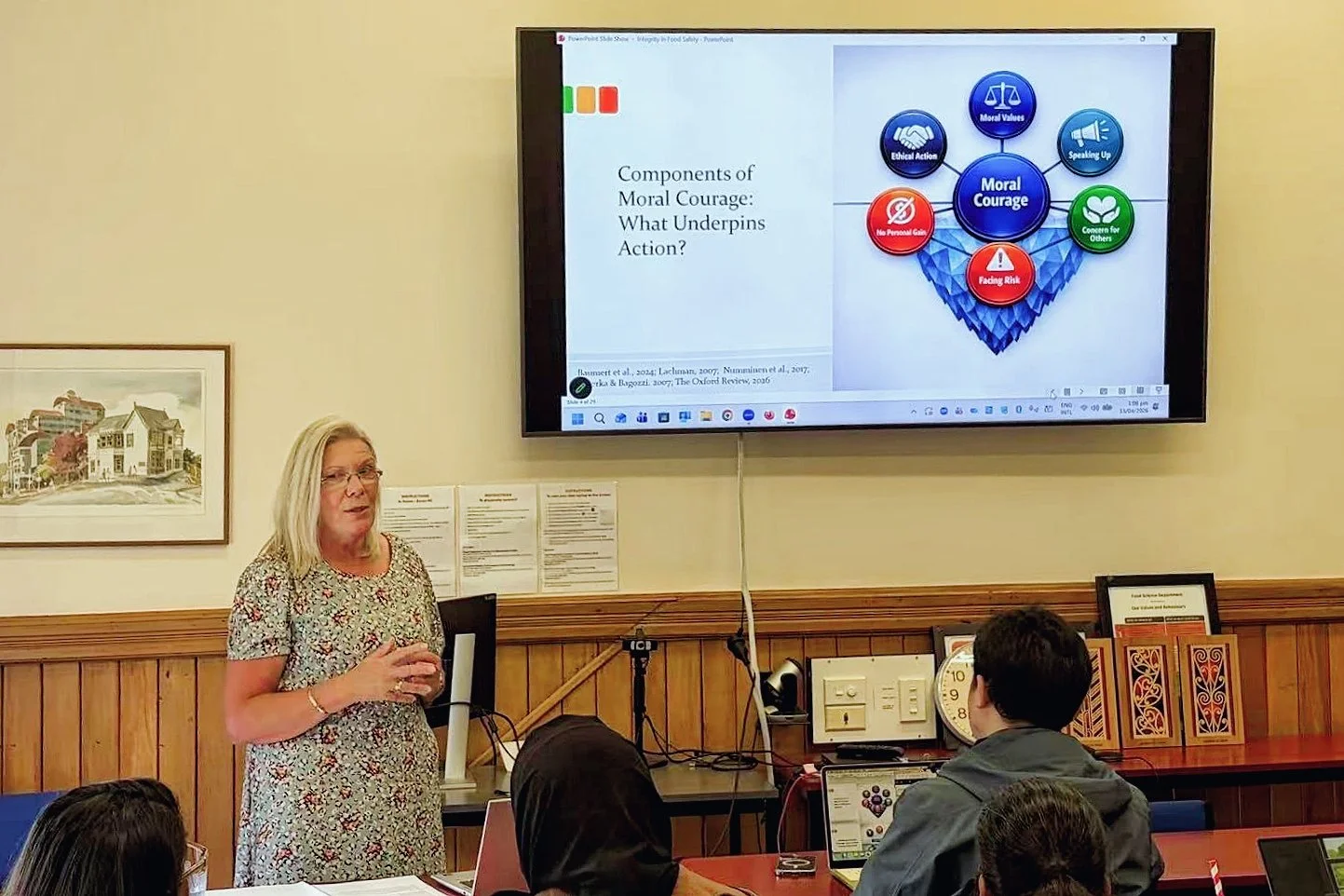
Figure 4. Dr Wendy Newport-Smith presenting on integrity and ethical behaviour in food safety, highlighting moral courage, speaking up, and the role of ethical leadership and whistleblowing in shaping organisational culture and preventing complacency
From Multiple Perspectives to Integration: The Future of Food Safety Culture
Although approaching the topic from different disciplinary angles, the four speakers converged on a shared insight: food safety culture cannot be directly “designed” through systems alone. Instead, it emerges and stabilises through the ongoing interaction of structures, relationships, and everyday practices.
The lecture series not only expanded students’ understanding of food safety culture, but also reflected the broader direction of the Food Safety Culture Lab. This includes moving beyond compliance towards culture, shifting the focus from individual behaviour to system practice, and strengthening the connection between theoretical frameworks and real-world application.
The Food Safety Culture Lab will continue to support this direction through interdisciplinary collaboration and practice-oriented research, advancing food safety culture as a lived and sustainable part of everyday organisational life.
Through engagement with guest speakers from across disciplines, the module created space to connect insight, experience, and practice, reinforcing the value of collaborative approaches to safer and more responsive food systems.
2026 | 04 | 15
Food Safety Culture · Collaboration · Practice · University of Otago · Food Systems · Public Health