
Rethinking Food Safety Culture Measurement: What Surveys, Triangulation, and AI Can Reveal
This week’s postgraduate Food Safety Culture module explored how food safety culture can be assessed with greater rigour and insight. Through three complementary presentations, students engaged with the role of validated surveys, the value of triangulation, and the growing potential of artificial intelligence in food safety research. Professor Phil Bremer considered the scientific foundations of survey-based assessment. Professor Miranda Mirosa highlighted the importance of viewing culture through multiple lenses. PhD candidate Ke Wang then looked ahead to the ways AI may support more continuous and behaviour-focused approaches to understanding food safety culture.
Taken together, these contributions outlined a clear direction of travel. Food safety culture assessment is moving beyond the measurement of perception towards the observation of practice, and increasingly towards the anticipation of risk.
Equally important was what followed. After the three presentations, the session shifted into a dedicated period of discussion and classroom activity. Here, the focus moved from understanding concepts to working with them in practice. Students were encouraged to explore how culture, often described as invisible, might be made visible, interpretable, and open to change.
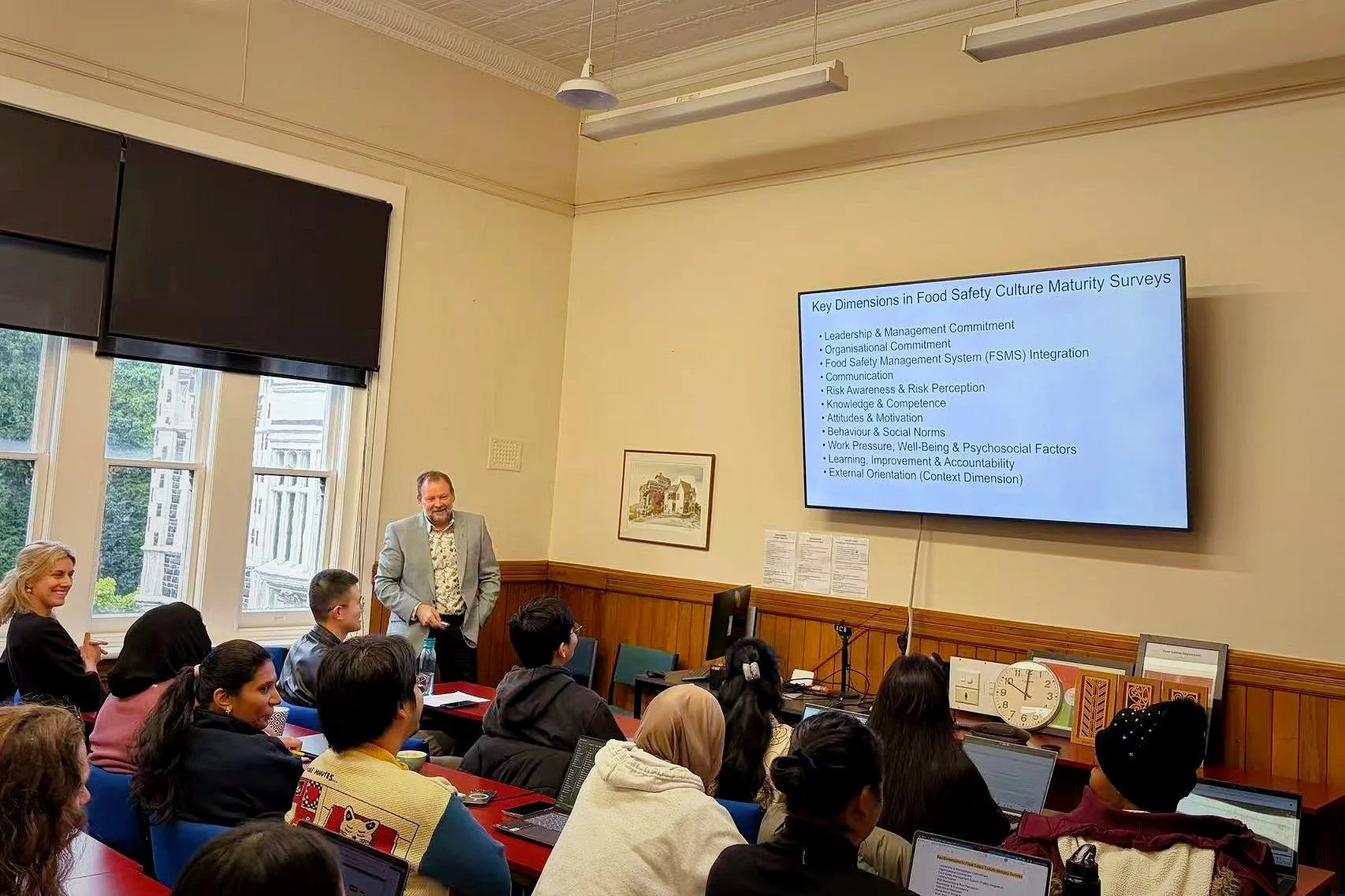
Phil Bremer:Why Validated Surveys Still Matter
Professor Phil Bremer opened the session with a simple but important reminder. Food safety failures are rarely the result of missing systems. More often, they arise from how people act within those systems.
Surveys remain one of the most widely used tools for assessing food safety culture. Their value, however, does not lie in producing a score. It lies in diagnosis. Surveys help us understand how food safety is perceived across an organisation, including priorities, beliefs, and signals from leadership.
At the same time, it is essential to recognise what surveys can and cannot do. They measure perception rather than behaviour. A high score does not necessarily reflect what happens in practice.
This is why validated tools are critical. A well-designed and validated survey ensures that what is being measured is genuinely related to food safety culture, rather than general satisfaction or socially desirable responses. Without this rigour, organisations risk drawing reassurance from data that may not reflect reality.
Used well, validated surveys can highlight where alignment breaks down. In particular, they help reveal whether leadership intent is experienced in the same way on the frontline. These gaps are often where risk begins to accumulate.
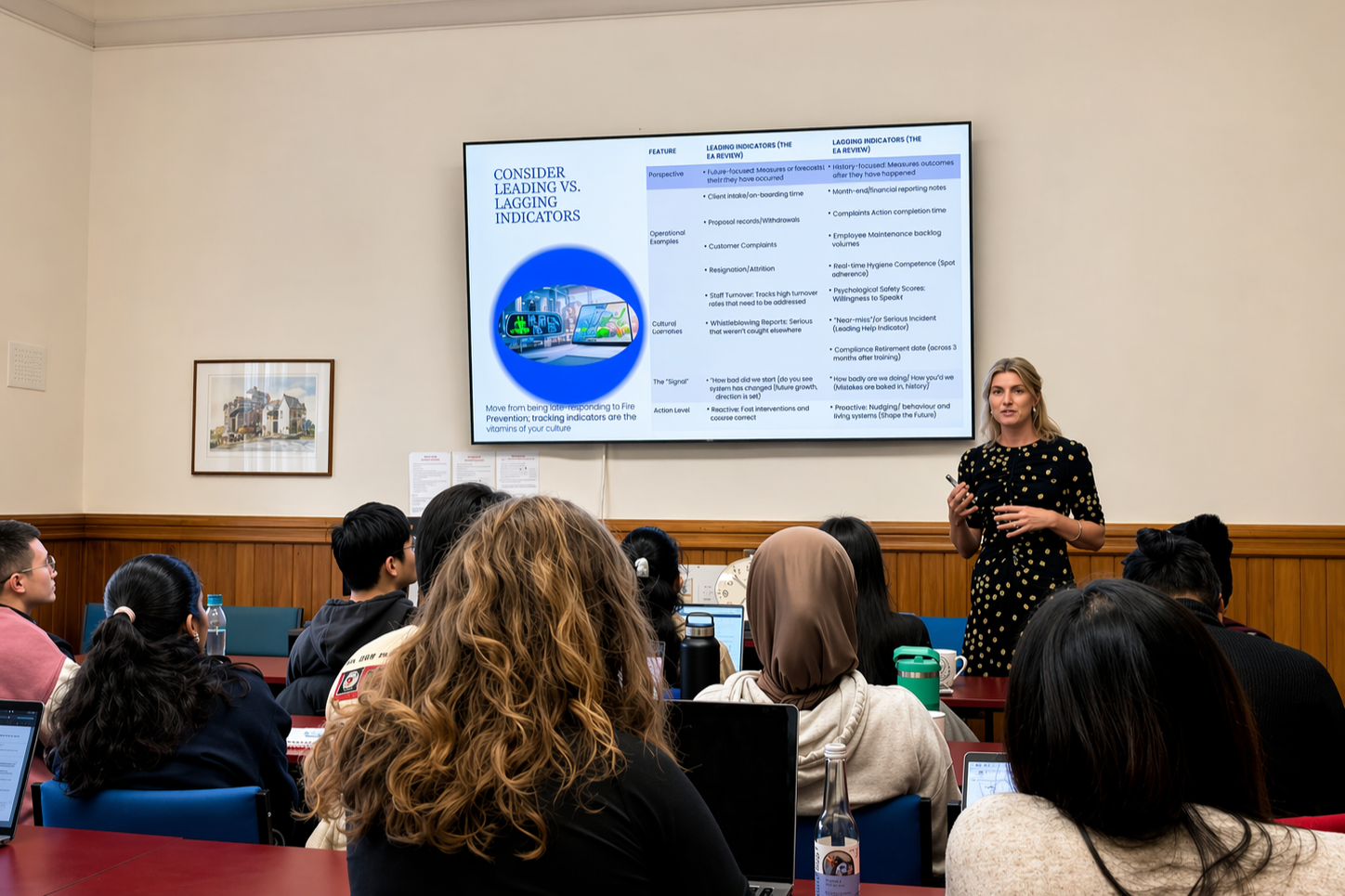
Miranda Mirosa: Looking Beyond What People Say
Building on this foundation, Professor Miranda Mirosa introduced a broader way of understanding culture, emphasising that food safety culture cannot be meaningfully interpreted through any single method alone. Instead, it is best approached through triangulation, which brings together three distinct perspectives.
Ø The first is the subjective lens, which captures what people say through surveys.
Ø The second is the objective lens, which looks at what people actually do through observation, records, and behavioural evidence.
Ø The third is the contextual lens, which explores why behaviours occur, drawing on interviews and qualitative insights.
Together, these perspectives allow culture to be understood as a system rather than an impression. Surveys offer an important starting point, but only part of the picture. Culture is also revealed through the traces it leaves in daily work and in the choices people make under pressure. Within this framework, alignment across sources strengthens confidence in the findings, while misalignment can be just as revealing. When what people say does not match what they do, it often signals where culture is under strain and where risk is taking shape in practice.
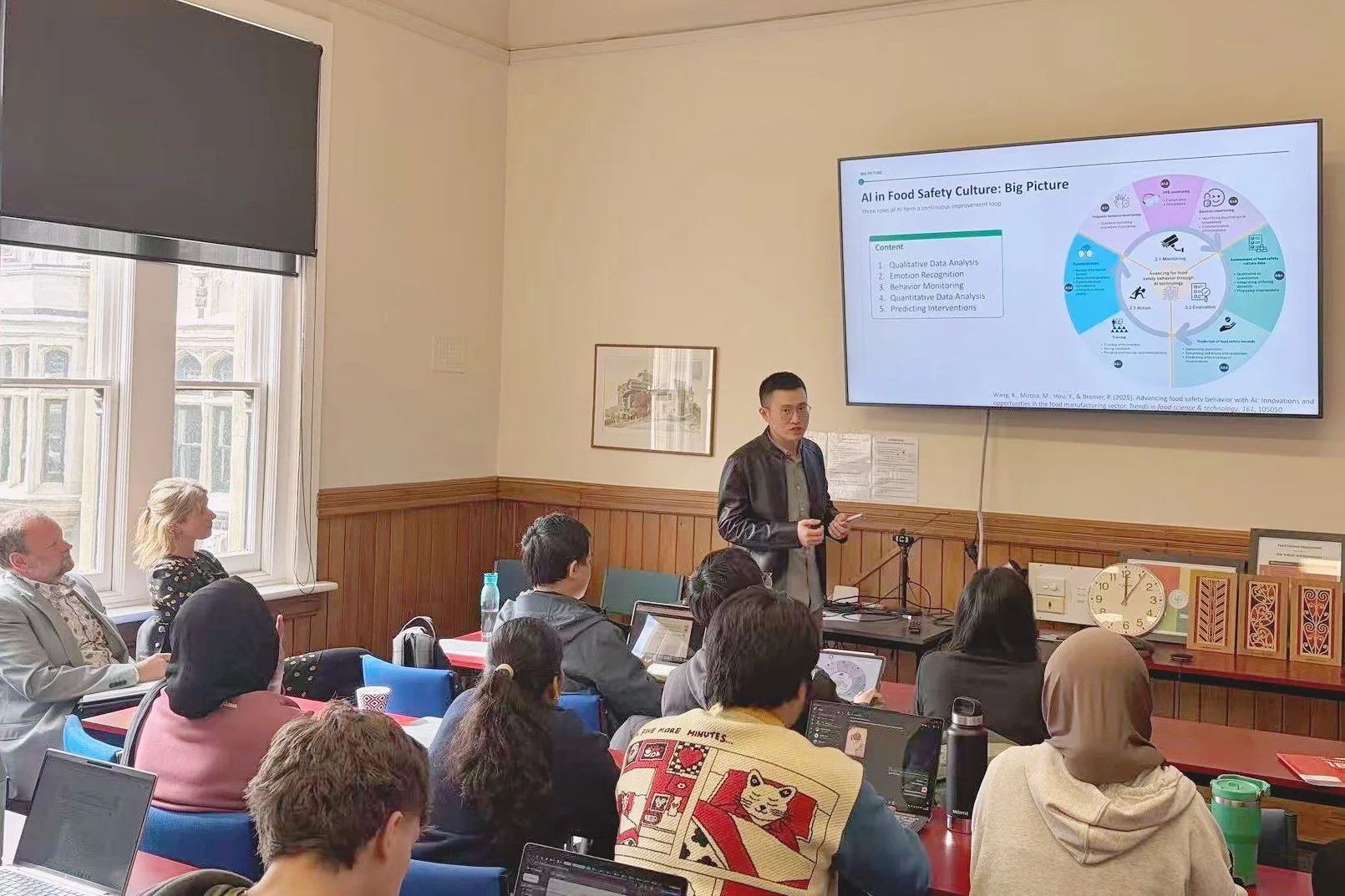
Ke Wang: Making Behaviour Visible Through AI
Ke Wang then extended the discussion by exploring how artificial intelligence may support more continuous, objective, and scalable ways of observing food safety practice.
Ø First, qualitative analysis. AI tools can support the coding and interpretation of interviews and open-ended data, helping to identify themes and patterns more efficiently.
Ø Second, behavioural monitoring. Technologies such as computer vision and sensors can track practices such as hand hygiene, use of protective equipment, and movement patterns in real time.
Ø Third, predictive insight. By identifying patterns in behaviour, AI can support earlier identification of risk and help evaluate the likely impact of interventions before problems occur.
This points to a broader shift in food safety, from reacting to problems after they arise to recognising risk earlier and responding more proactively. At the same time, the use of AI raises important questions around trust, privacy, and acceptance, reminding us that technology does not sit outside culture but becomes part of the very environment it seeks to understand. In this sense, AI is best seen as supporting human judgement rather than replacing it.
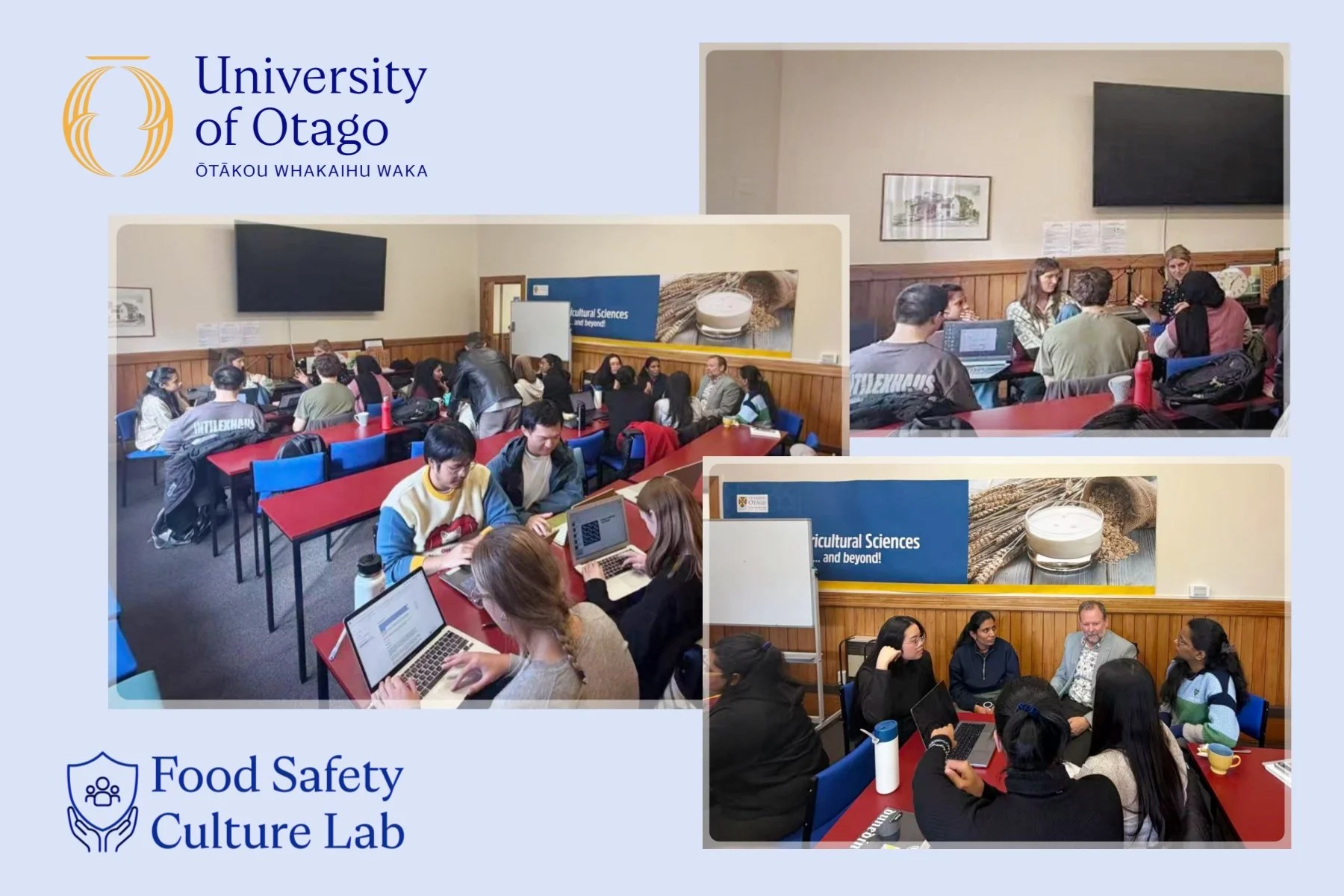
From Theory to Practice: A Classroom Exploration
Following the presentations, the session moved into a structured discussion and workshop activity, where the earlier ideas were brought together and tested in practice. Students worked through a staged exercise that moved from general impressions of culture towards evidence that could be examined and acted upon. They considered how perceptions might be captured through survey statements, how these could be checked against behaviour or organisational records, and how AI might support more continuous forms of measurement.
The most revealing moments came when these sources of evidence did not align. A survey might suggest that safety is consistently prioritised, while records show that safety meetings are cancelled during busy periods. Staff may report that workloads are manageable, yet observation points to sustained time pressure and rushed behaviour.
Students were then asked to interpret these gaps using concepts from behavioural science, including optimism bias, social desirability, decision fatigue, peer influence, and the normalisation of deviation. In doing so, the discussion moved beyond whether people knew the rules, and towards a more practical question of what conditions make those rules difficult to follow.
The session also considered how AI might be introduced into such environments, and whether it would be experienced as support or as surveillance. Students discussed ways of building trust, including anonymised data use, a focus on coaching rather than punishment, and clear communication about purpose and boundaries. Together, these conversations highlighted that the success of any measurement approach depends as much on human factors as on technical capability.
Closing Reflection: From Measuring Culture to Shaping It
The session pointed to a broader shift in how food safety culture is understood.
Assessment is no longer about assigning a score, but about building a layered understanding of how people think, act, and respond under pressure.
Validated surveys offer a starting point. Triangulation adds depth. AI opens up new possibilities for visibility and anticipation.
Together, these approaches create a continuous cycle of measurement, interpretation, and improvement.
At its core, food safety is shaped not simply by systems, but by the choices people make in real situations. Culture is not something an organisation has, but something continually realised in practice. In this sense, measurement is not only a way of observing culture, but a means of understanding it, engaging with it, and ultimately improving it.
Through a postgraduate session on food safety culture assessment, students explored how validated surveys, triangulation, and emerging AI tools can bring greater depth to the study of culture, helping make visible the gap between perception and practice, and opening new ways of understanding risk in everyday food safety work.
2026 | 04 | 22
Food Safety Culture · Measurement · Triangulation · AI · Behaviour · Practice