
When Theory Meets Practice: Making Culture Visible in Action
This week marked an important stage in the Food Safety Culture module. Students moved beyond understanding theory and began translating it into practical tools that can be used in small and medium-sized food businesses.
Across the group presentations, students focused on real operational challenges and drew on behavioural science, psychology, and culture theory to design low-cost, practical interventions. These tools were not built around more training or more rules. Instead, they were designed to reshape the conditions in which decisions are made, so that safe behaviour becomes easier in everyday work.
In simple terms, the focus shifted from asking people to remember the right thing, to designing systems that make the right thing more likely to happen.
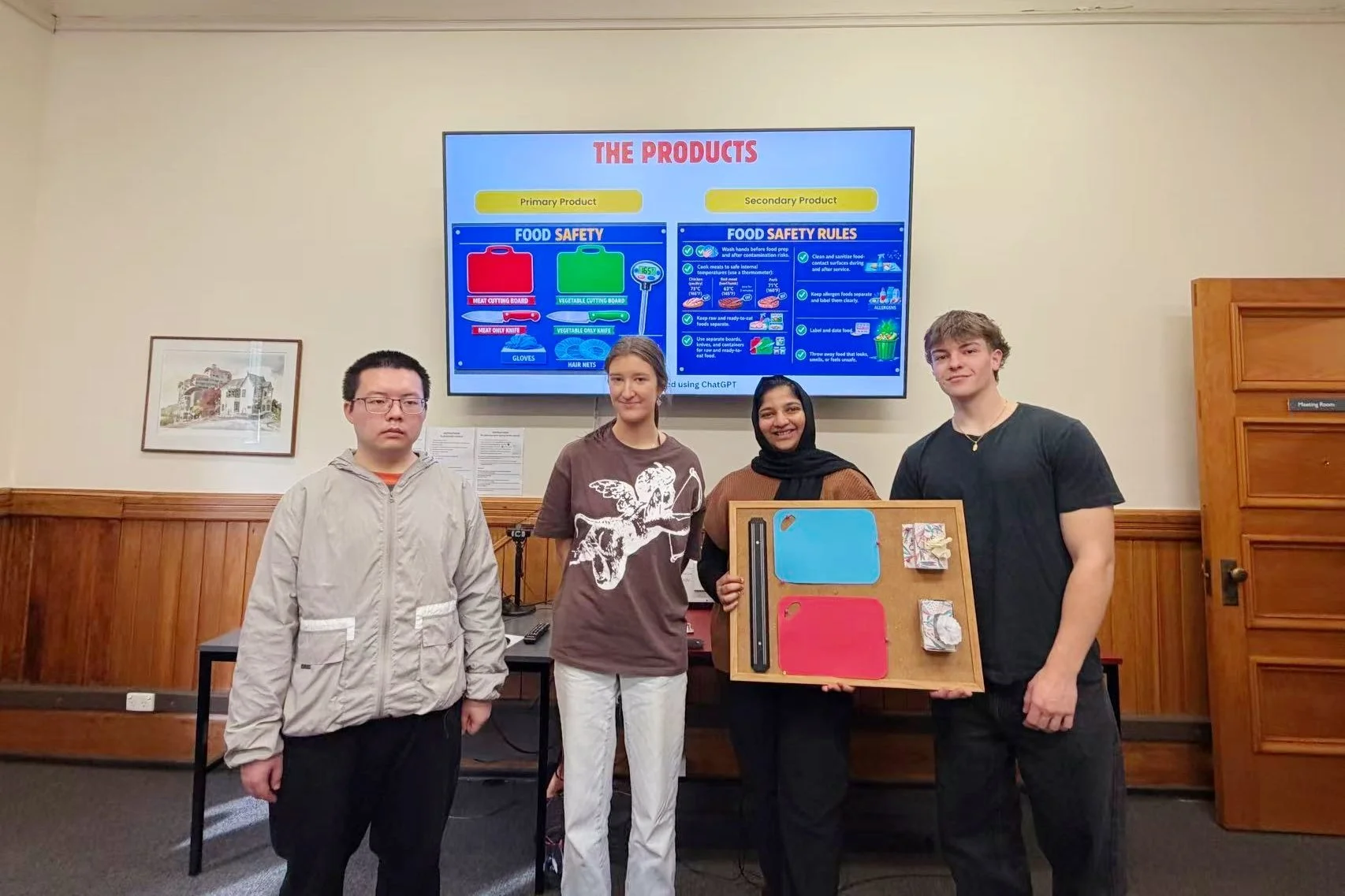
Group 1: Making the right choice immediate through environmental design
The first group focused on task switching in busy kitchen environments and developed a tools board and rules system. Their analysis showed that inconsistent hygiene practices, such as reusing tools across raw meat and ready-to-eat foods, misplacing equipment during busy service, or skipping PPE and sanitising steps to keep up with orders, are not usually caused by a lack of knowledge, but by the way decisions are made under pressure. When time is limited, people tend to rely on fast, automatic responses rather than careful judgement.
Rather than adding more training, the group redesigned the work environment. Colour-coded tools, including boards, knives, tongs, and other frequently used utensils, were matched with clear visual outlines on the tools board, so staff could immediately see where each item belonged and which tool should be used for each food category. Fixed storage locations also made missing or misplaced items easier to spot, reducing the effort needed to search and decide what to use.
As a result, staff do not have to stop and think as much during busy periods. The right tool is already in the right place, clearly marked for the right job, so they are less likely to grab whatever is nearby or reuse something inappropriate. Food safety becomes easier to follow because the workspace itself helps guide the correct action.
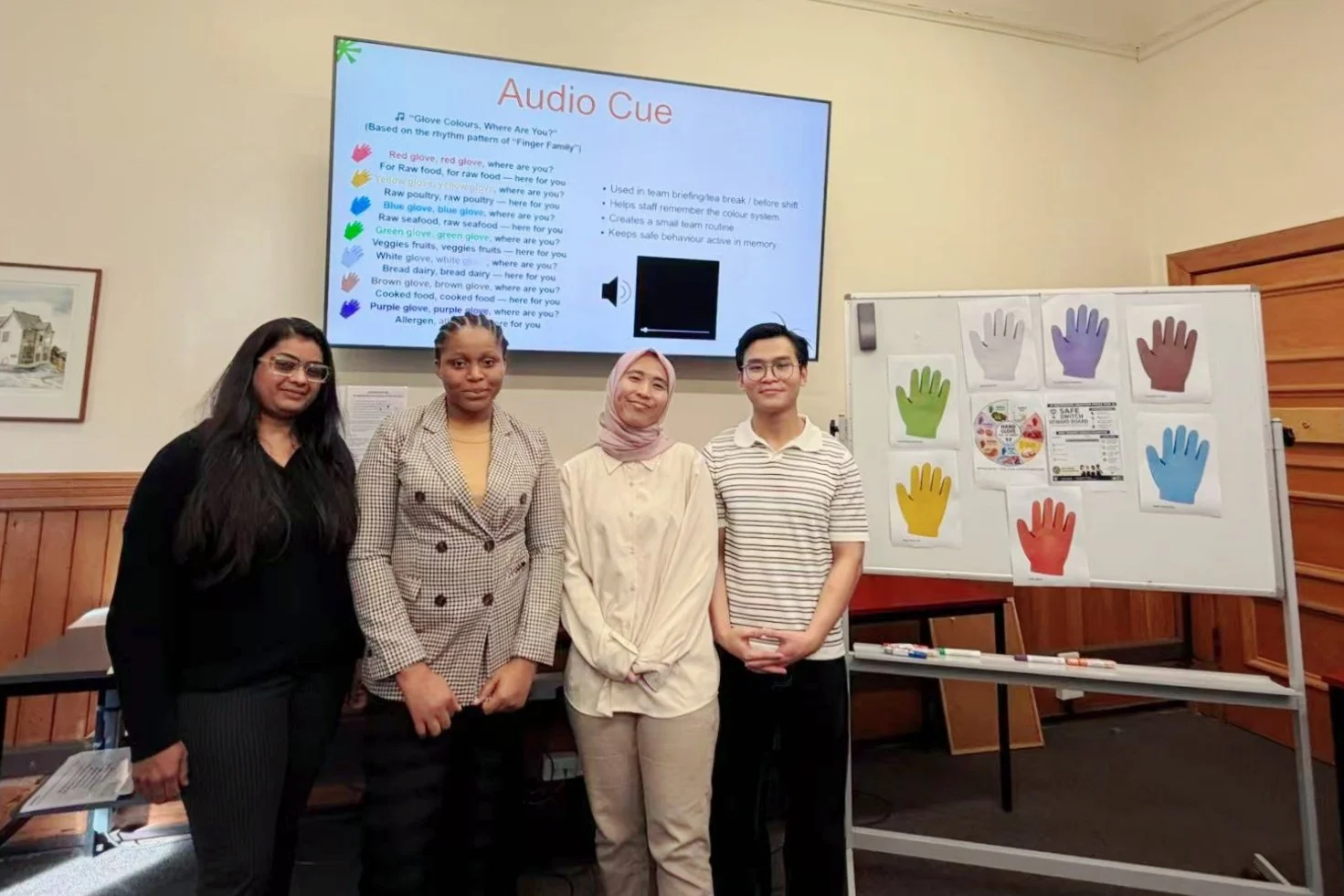
Group 2: Making safe behaviour the easiest option under pressure
The second group developed a Safe Switch Kit built around colour-coded gloves for different food categories, focusing on transitions between raw, cooked, vegetable, and allergen-related tasks where mistakes are most likely during busy periods. They showed that these issues are rarely due to a lack of knowledge, but more often result from time pressure and cognitive load, which lead staff to rely on quicker shortcuts.
By linking glove colours to food categories and placing them at the point of use, the system makes the correct action easier to recognise and carry out. Posters and zone markers using the same colour system provide simple visual cues at the moment of action, reducing the need for memory or deliberate thinking.
The group also introduced a short glove-use song and a reward board to support habit formation and team engagement. The song reinforces key steps through repetition, while the reward board makes safe behaviour visible and positively reinforced. Together, these elements help embed glove changing and hand hygiene into the normal rhythm of work.
At the same time, mismatched glove use becomes more visible, helping reduce the tendency to overlook small risks. Over time, repeated cues and reinforcement make safe behaviour more consistent and automatic under pressure.
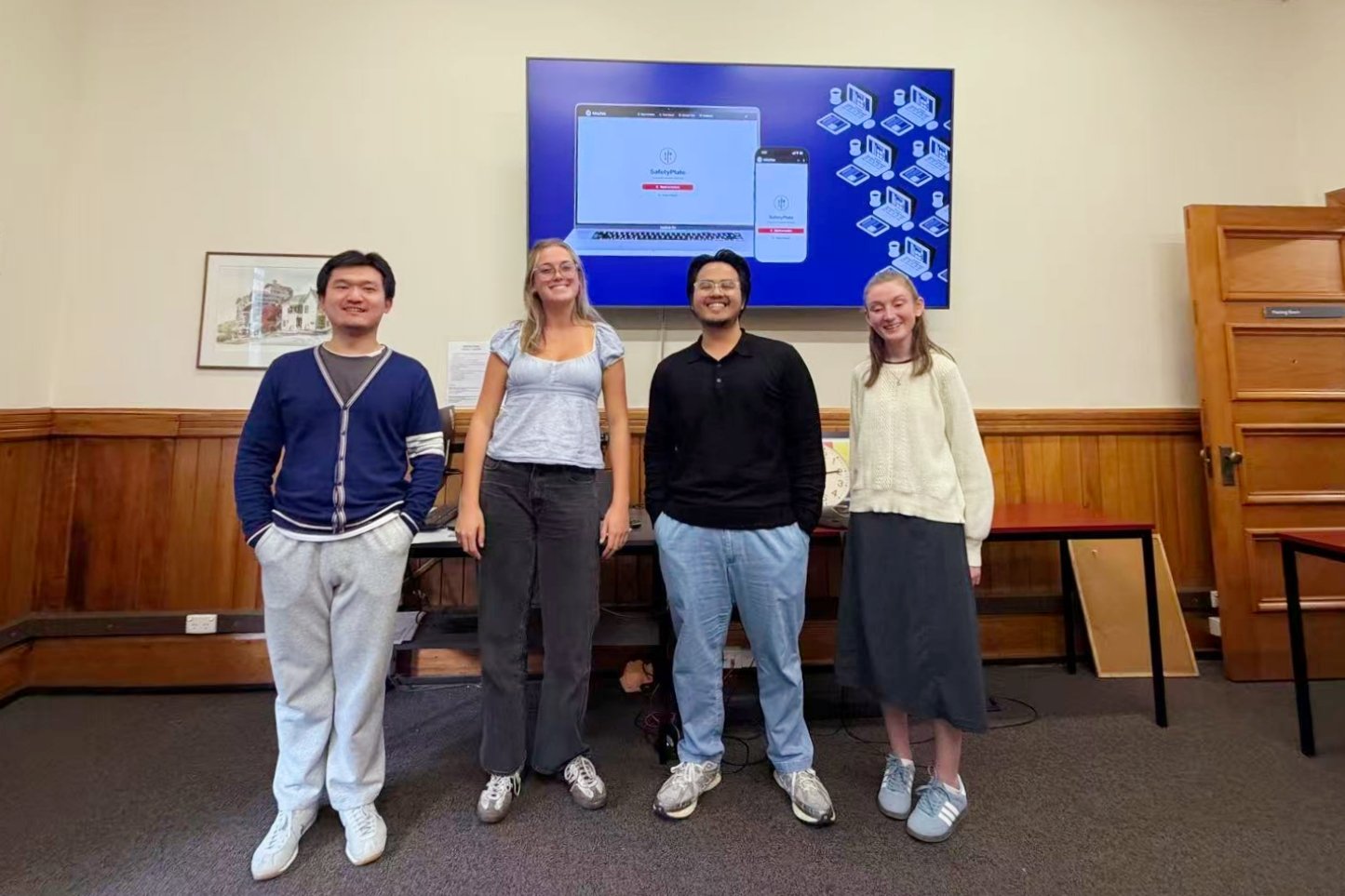
Group 3: From silence to speaking up through system design
The third group shifted the focus from individual actions to organisational behaviour. They developed SafetyPlate, an anonymous digital reporting system designed to remove barriers to speaking up.
Their work highlighted that in many food safety incidents, problems are noticed but not reported. Fear of blame, power distance, and concern about workplace relationships can all discourage employees from raising issues. This allows risks to build quietly over time.
By introducing anonymity and a simple digital interface, the system reduces the perceived personal cost of reporting. It creates a safer space for employees to act on what they already know. At the same time, mobile access makes reporting quick and practical, even in busy environments.
More importantly, the system reshapes how responsibility is understood. By making issues visible and shareable, it supports a form of distributed accountability where everyone can contribute to identifying risk.
Over time, this approach encourages a shift from a culture where problems are hidden to one where they are used to improve the system. Food safety becomes a shared and active responsibility rather than something managed only from above.
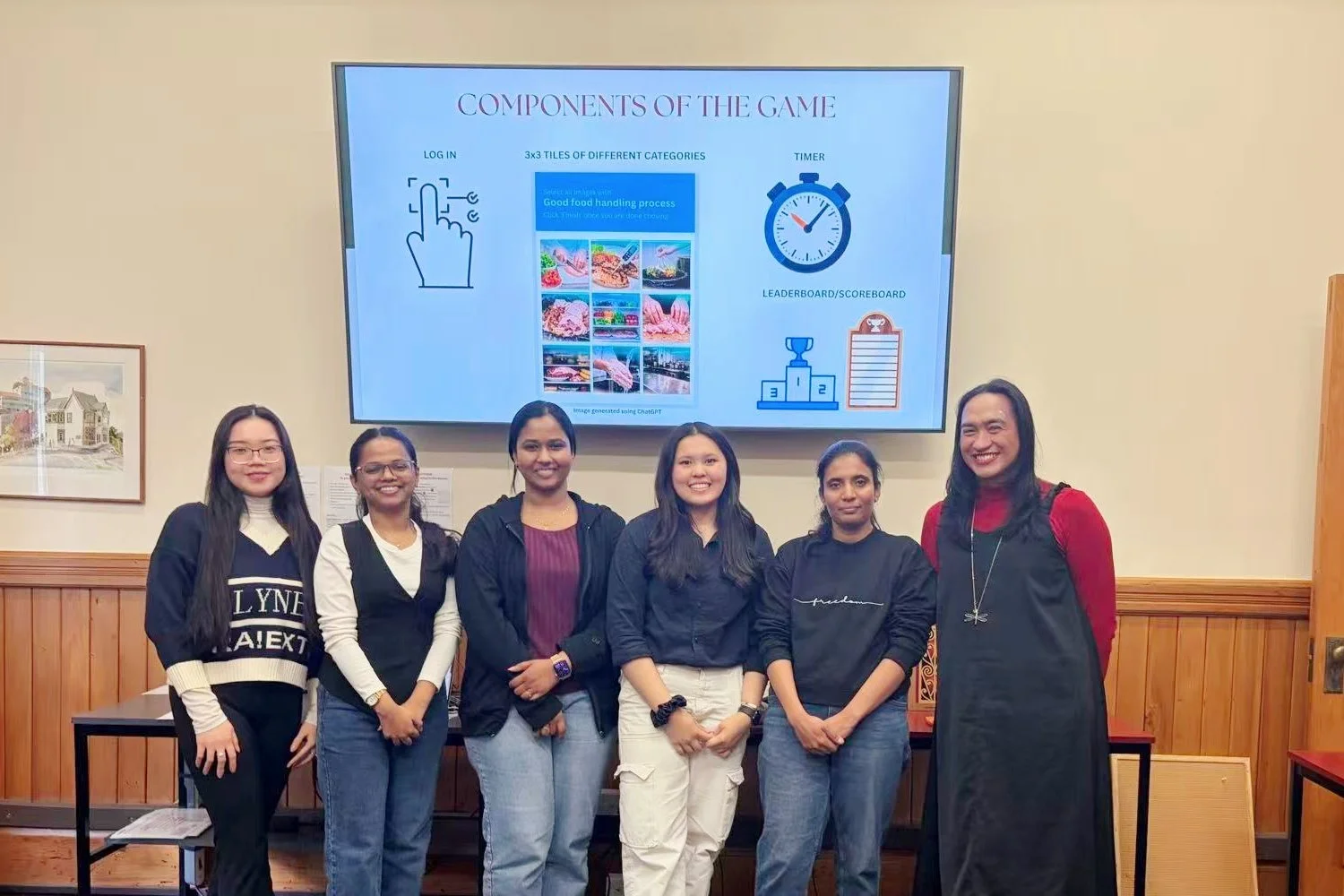
Group Four: Building habits through everyday practice
The fourth group approached the challenge through behavioural training, using a game-based tool to embed food safety into daily decision making. They recognised that in fast-paced workplaces, people often choose what is quickest rather than what is safest, especially when under pressure.
Their solution was a short, repeated activity that allows staff to practise making quick decisions in realistic scenarios. With time limits, immediate feedback, and repeated exposure, the tool helps build confidence and consistency in judgement.
Unlike traditional training, which happens occasionally, this approach keeps food safety active in everyday thinking. It supports habit formation by reinforcing correct decisions over time.
The design also includes elements such as scoring, visibility, and manager participation, which introduce social influence and shared expectations. This shifts food safety from an individual responsibility to something that is visible and reinforced within the team.
By keeping the activity simple and quick, the tool lowers the barrier to participation and makes safe decision making easier to sustain in practice.
Conclusion: From understanding culture to shaping it
Across all four groups, a clear shift emerged. Food safety culture is no longer treated as something abstract or symbolic. Instead, it is approached as something that can be designed, tested, and improved through system and process design and everyday practice.
These projects show that effective food safety interventions are not about asking people to know more. They are about reducing effort at critical moments, shaping the environment, and supporting better decisions in real conditions.
In this sense, food safety culture is not something an organisation has. It is something that is continuously created through what people do. This is where the work of the module becomes most meaningful. It moves from measuring culture to actively shaping it, and from theory into practice.
2026 | 04 | 29
Food Safety Culture · Behaviour · Design · SMEs · Practice
Through a postgraduate session on food safety culture in practice, students explored how behavioural theory can be translated into simple, usable tools for SMEs, helping make safe behaviour more visible, easier to follow, and more consistent under pressure.