
The Food Safety Culture Lab
Advancing research on how food safety culture is measured, actioned, and sustained in Aotearoa New Zealand.
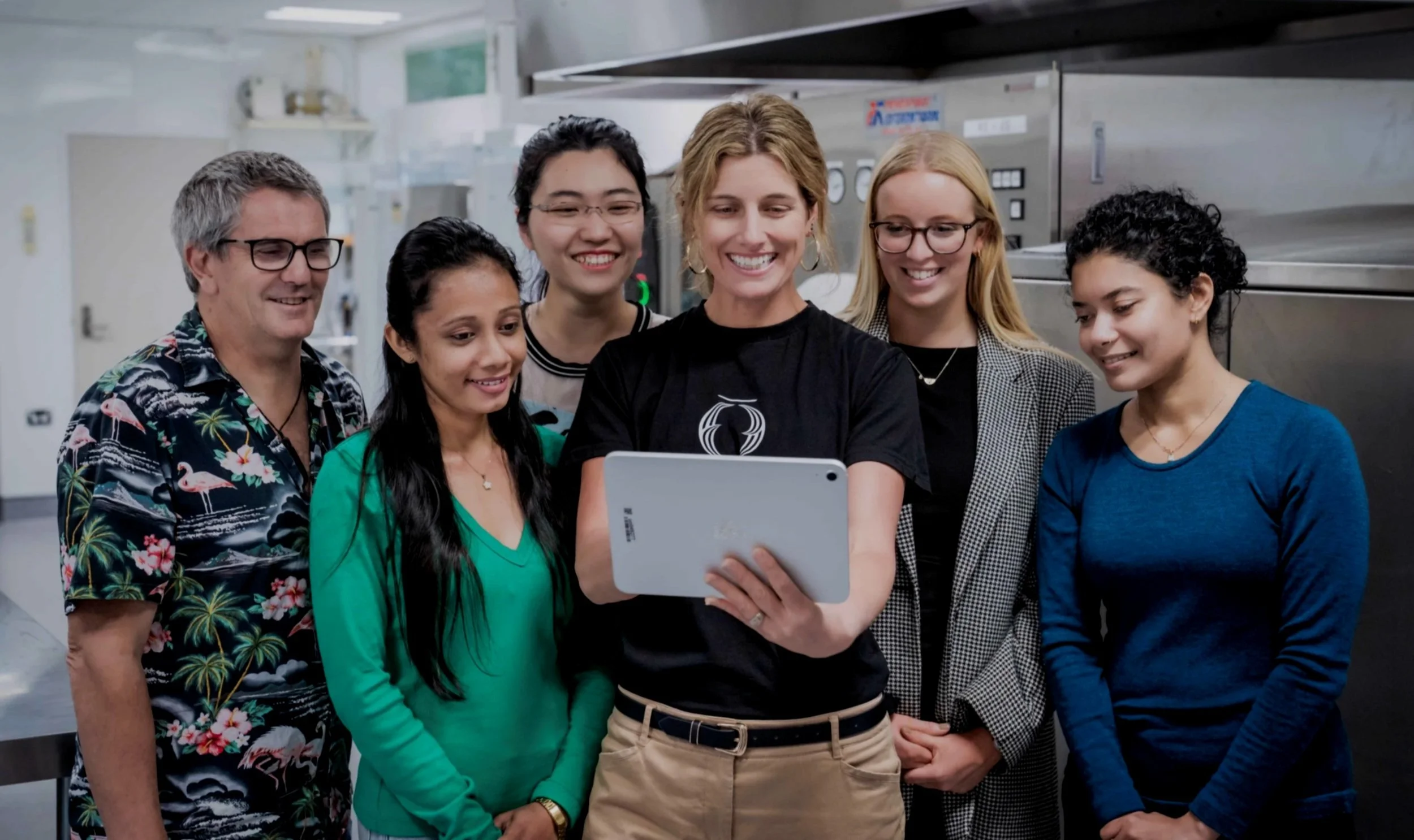
Evidence-based Insights into the People-side of Food Safety.
Our Story
Our work began with a simple question: why do well-designed food safety systems sometimes fail in practice?
Across contemporary food systems, organisations invest significant effort in procedures, training, compliance, and technical controls. Yet food safety is not sustained by systems alone. It is shaped in everyday practice, where people interpret expectations, respond to changing conditions, and make decisions in real time.
As food systems become more complex, the relationship between formal systems and lived practice becomes increasingly important. Our research is grounded in that space. We are interested in how food safety is understood, negotiated, and sustained in real organisational settings, especially when uncertainty, competing priorities, and operational pressures influence what people are able to do.
Discover Recent Work and Updates ——
Updates featured here reflect activities, research, and developments from the Food Safety Culture Lab and organisations connected to our work.

Latest from the Lab & Network
-
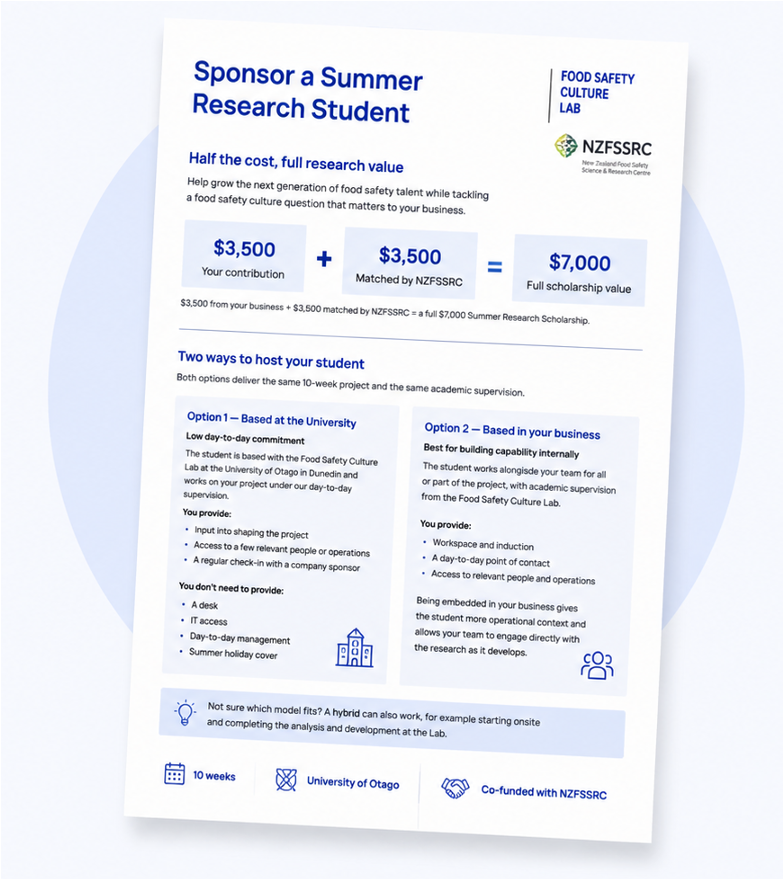
![Sponsor a Summer]()
Sponsor a Summer Research Student
-
![]()
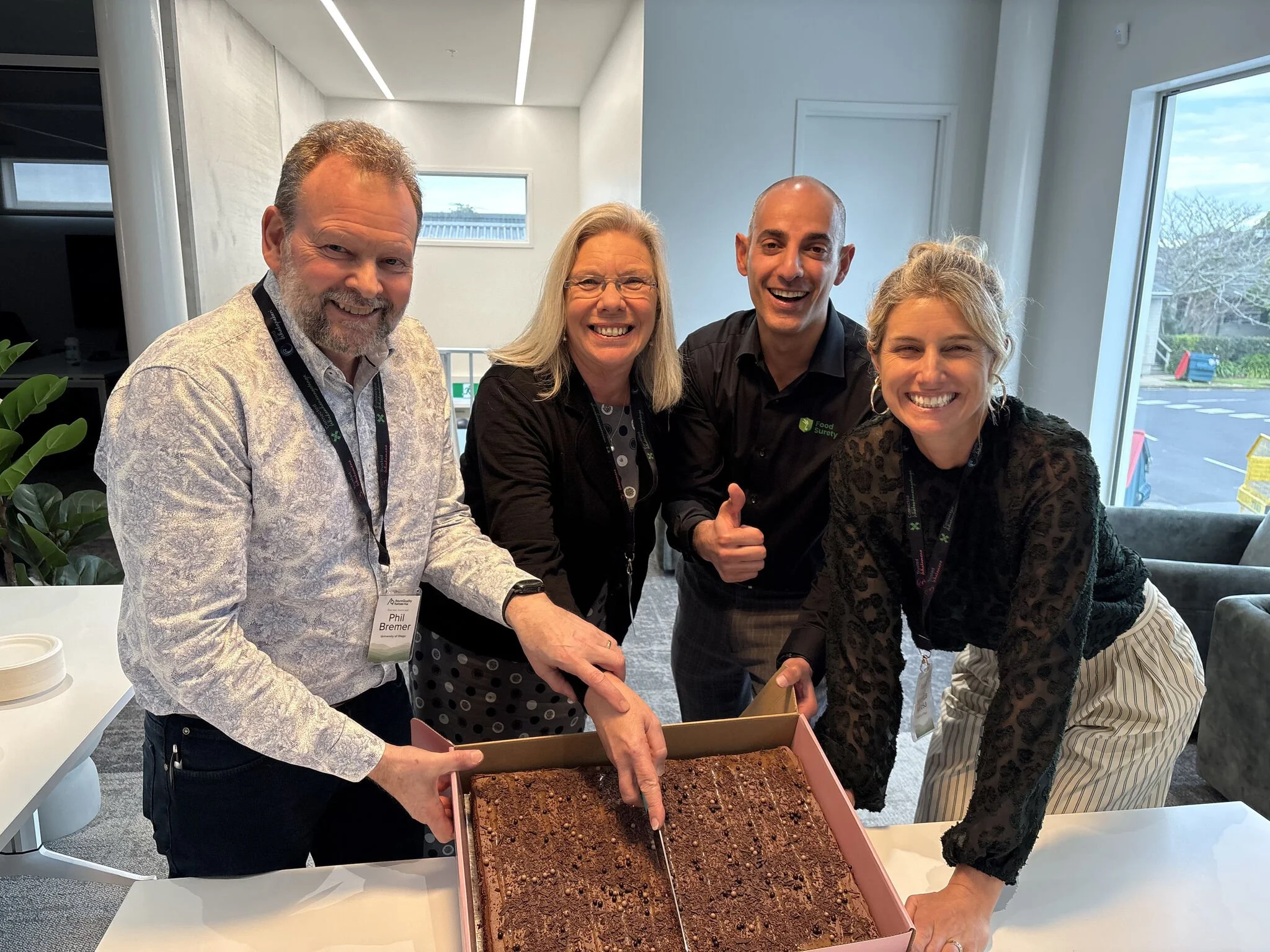
Aotearoa Food Safety Culture Champions
-
![]()
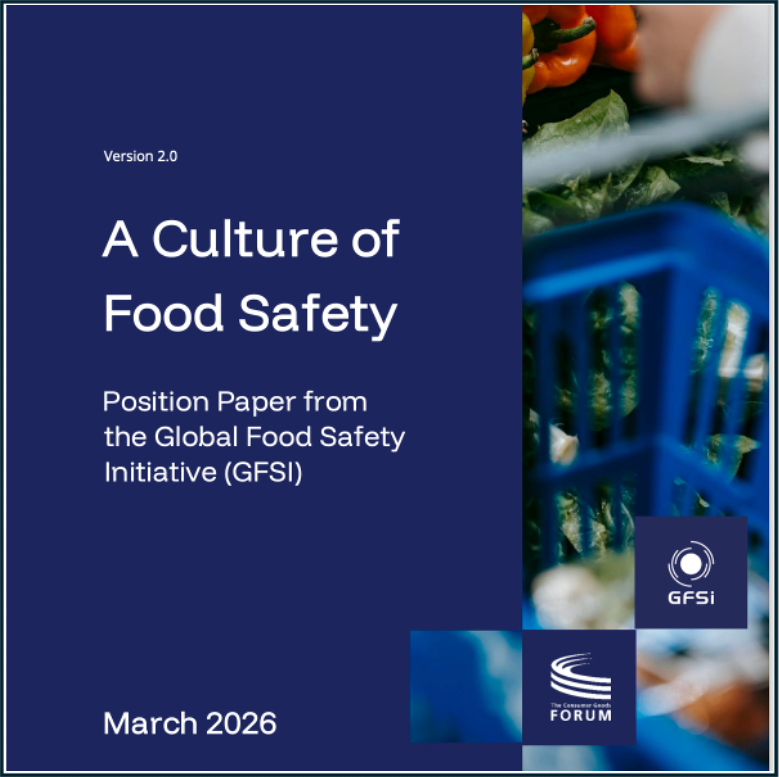
GFSI Updates Its Food Safety Culture Position Paper
-
![]()
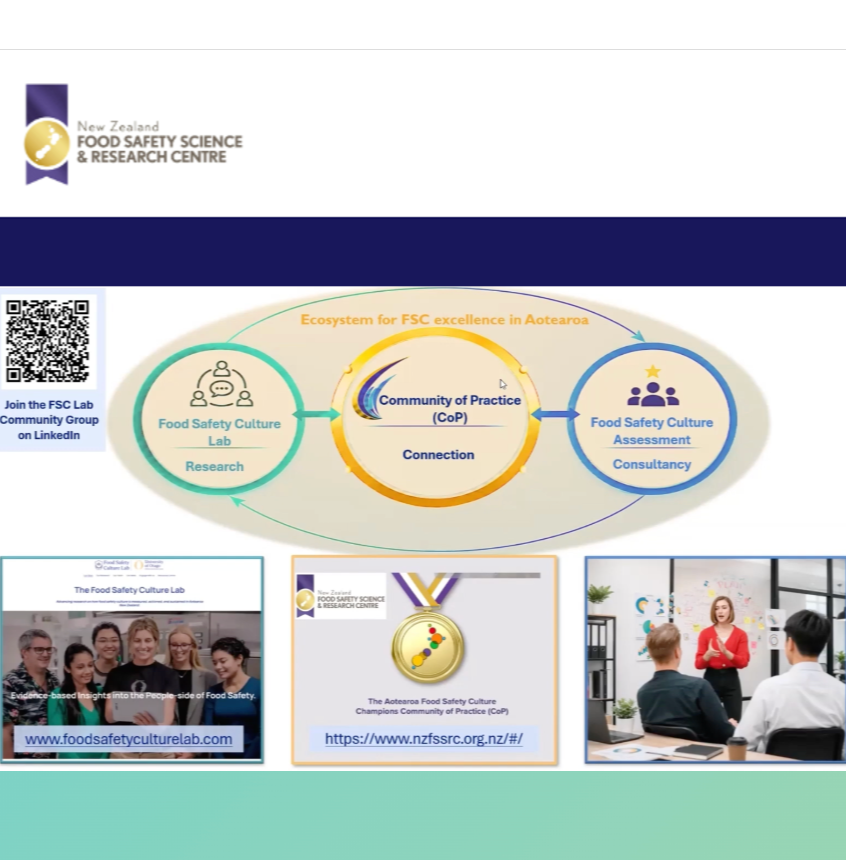
Food Safety Culture Champions: Community of Practice Webinar
Our Purpose
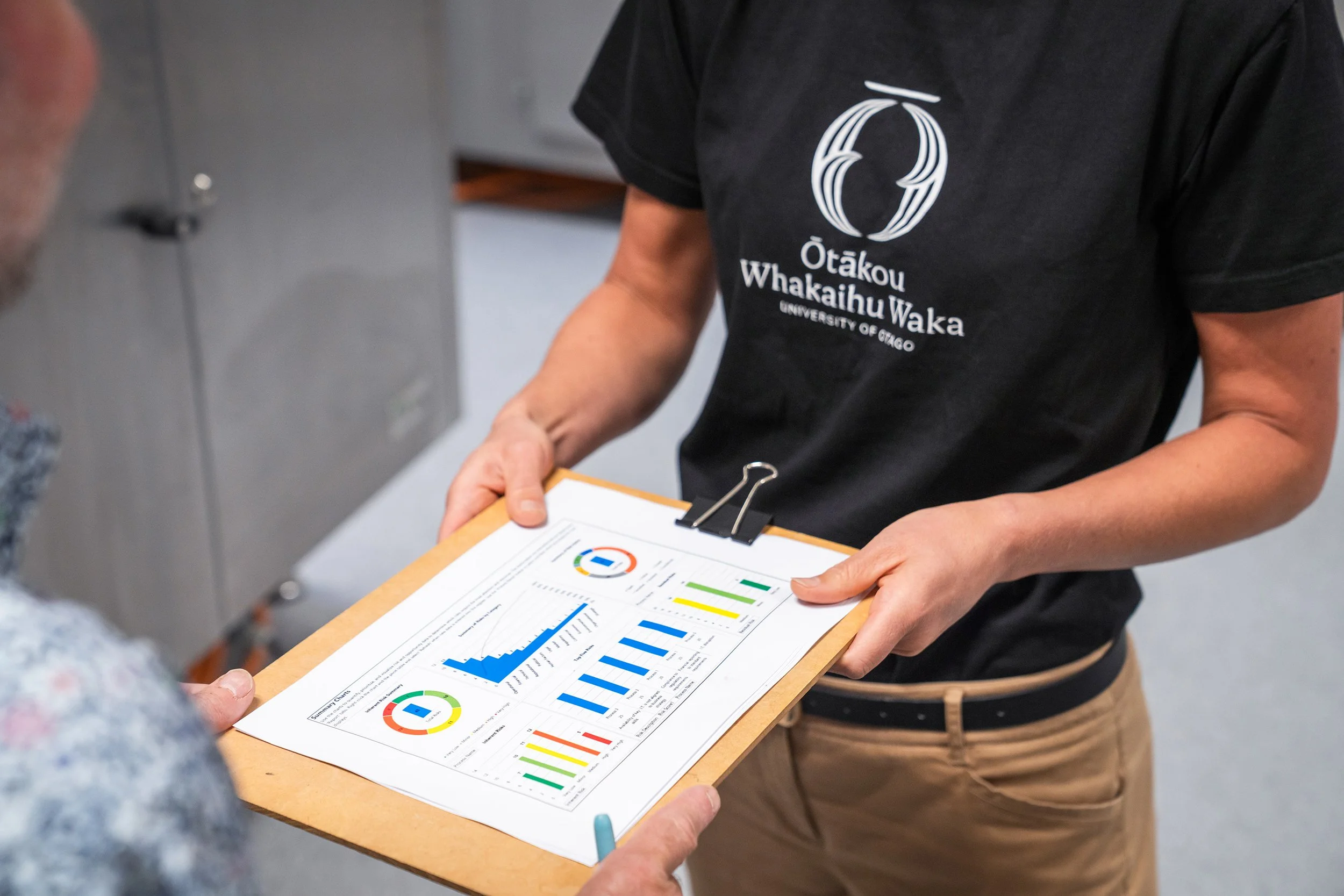
The Food Safety Culture Lab develops rigorous, practice grounded research that deepens understanding of how food safety culture is built, sustained, and challenged across contemporary food systems.
We focus on the human, organisational, and relational dimensions of food safety. This includes how people make sense of expectations, communicate risk, respond to pressure, and work together to support safer practice over time.
This matters because food systems are changing. Climate pressures, sustainability demands, shifting consumer expectations, demographic change, geopolitical disruption, digital technologies, automation, and evolving regulation are all reshaping the environments in which food safety is enacted.
Through empirical inquiry and interdisciplinary collaboration, the Lab seeks to generate insight that can inform policy, education, and practice.
Rather than reducing complexity to simple answers, we aim to strengthen the shared conditions that help safe practice become possible, meaningful, and enduring.
In doing so, the Food Safety Culture Lab supports the long term development of food safety culture as a collective, evidence informed, and system level practice across Aotearoa New Zealand.
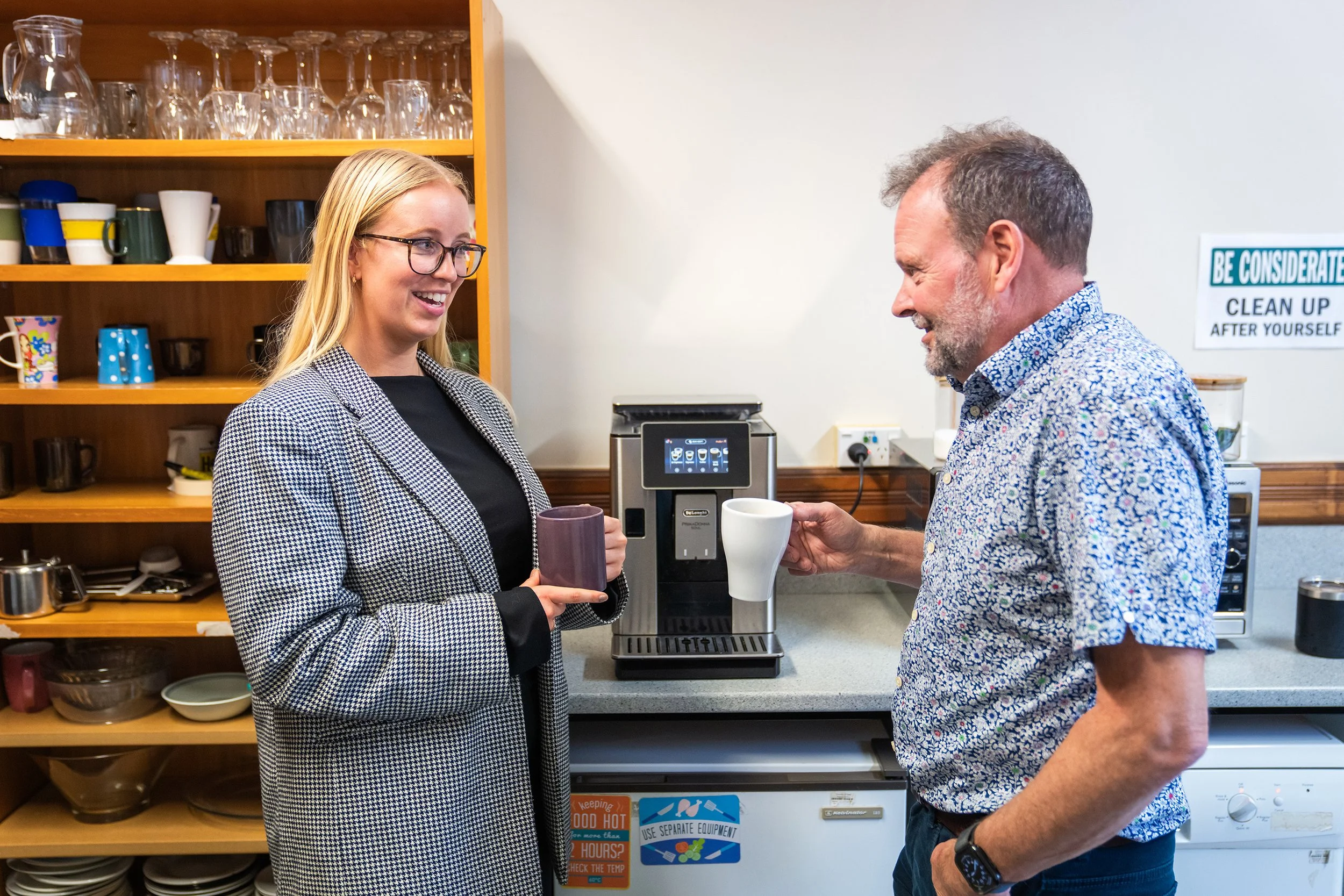
Food safety is not only a technical challenge. It is also a human one. Whether systems work as intended depends in part on how people recognise risks, raise concerns, interpret expectations, and respond when time pressure, production demands, and uncertainty are present.
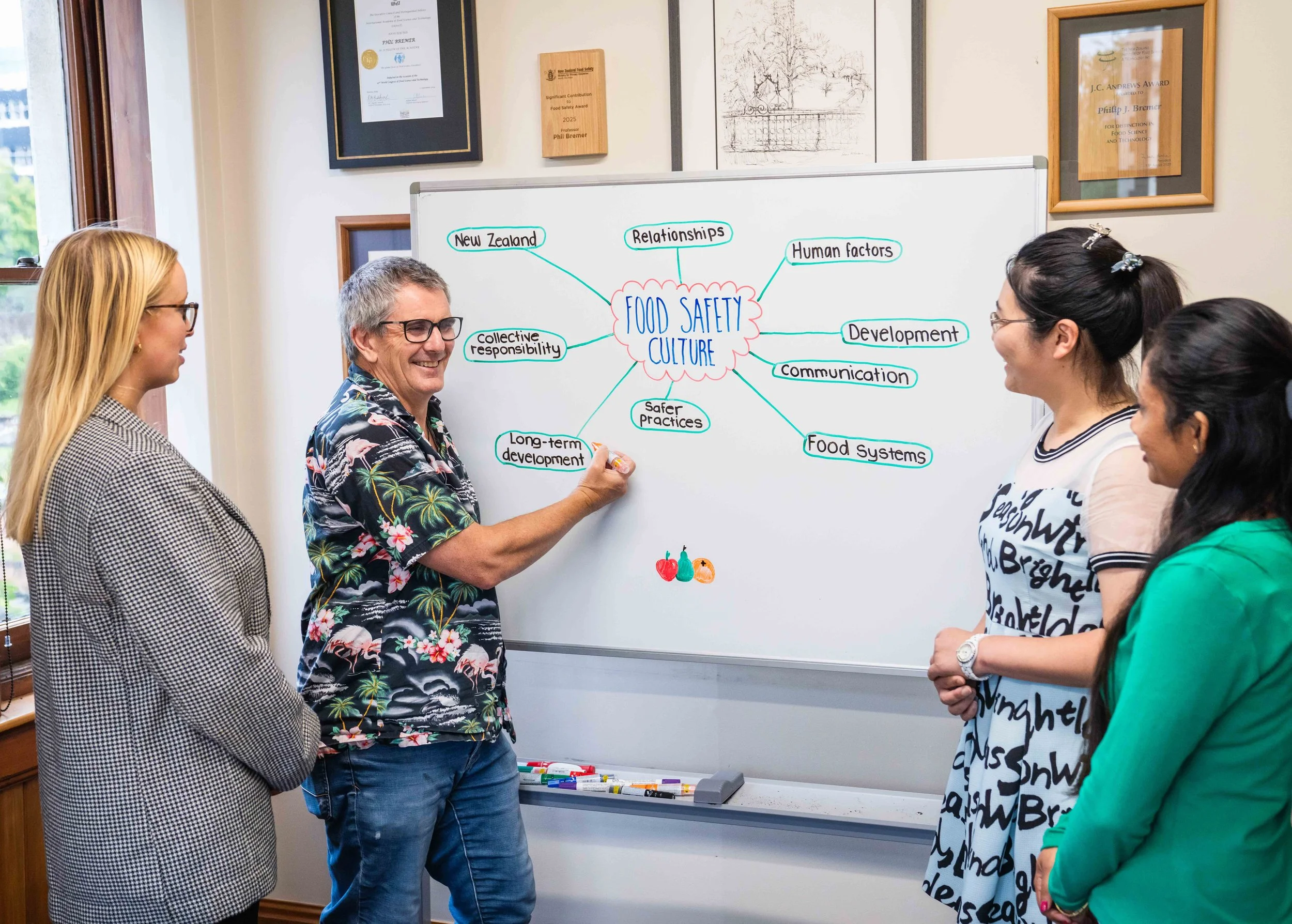
Food safety culture helps explain these everyday practices. It shapes how responsibility is shared, how people learn from mistakes, how professional judgement is exercised, and how safety is maintained alongside productivity, time pressures, and commercial demands.
In increasingly complex and changing food systems, these human and organisational dynamics are becoming more important, not less.
Why food safety culture?
Across Aotearoa New Zealand and around the world, food systems are becoming more complex and more exposed to disruption. Climate change, sustainability pressures, shifting consumer expectations, geopolitical instability, demographic change, digital technologies, automation, and evolving regulatory demands are reshaping how food is produced, processed, monitored, and trusted. The pace of change, and the uncertainty that surrounds it, are now especially high.
These developments make it more important than ever to understand not only how food safety is designed through policies, procedures, and formal systems, but also how it is enacted in everyday work. As food systems become more dynamic, food safety depends not only on technical controls, but also on people’s capacity to interpret situations, communicate concerns, adapt responsibly, and sustain safe practice under pressure.
Why now?
Let’s Work Together
If you are interested in our research, collaboration opportunities, please leave your details below. We will be in touch.