
World Food Safety Day 2026: From burden to local solutions, from evidence to everyday practice
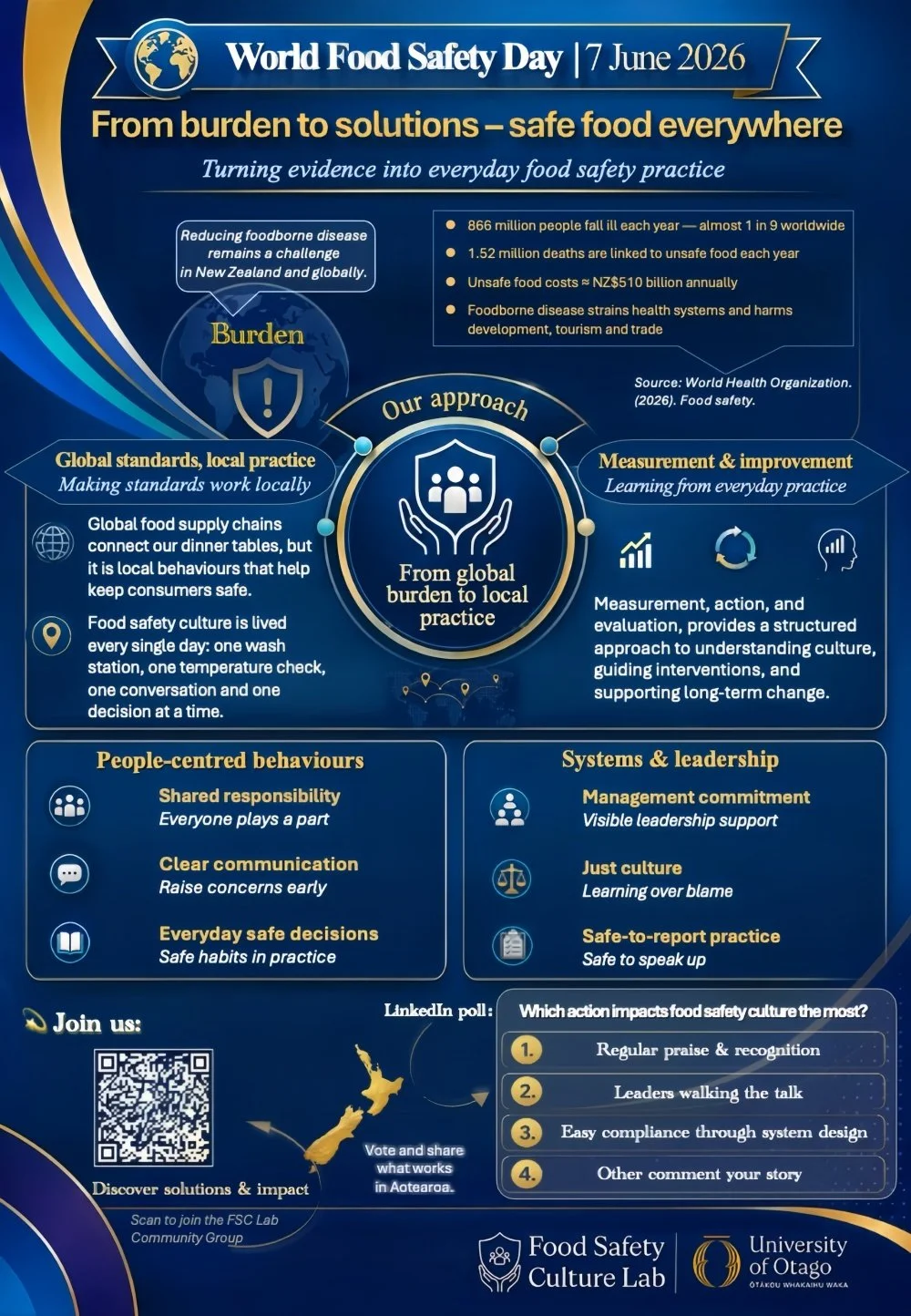
💫 World Food Safety Day is a reminder.💫
It reminds us that food safety does not live only in regulations, standards, test reports or training documents. It also lives in everyday work: a hand washed properly, a temperature check recorded carefully, a concern raised in time, and a decision made safely even under pressure.🌟
The official theme for World Food Safety Day 2026 is “From burden to solutions – safe food everywhere.” This theme draws attention to the real burden of foodborne disease, but it also asks a further question: once risks have been identified, data have been gathered and standards have been developed, how can evidence be turned into practical, sustainable solutions that improve everyday food safety practice?
For the Food Safety Culture Lab, this theme sits at the heart of our work. We are interested in how food safety knowledge enters organisations, how standards are understood and carried by people, and how solutions become part of teamwork, communication, leadership and daily behaviour.
From global burden to local practice in New Zealand
This year’s World Food Safety Day theme not only asks us to recognise the burden of foodborne disease. It also invites us to keep asking: what kinds of change actually help food safety culture to develop, be supported and remain effective in everyday work?
To mark World Food Safety Day 2026, we invite food industry professionals, researchers, students, educators and industry partners to take part in our LinkedIn poll and share examples from their workplace, team or sector. Your experience may come from a processing floor, a commercial kitchen, an audit, a training session, a team conversation, or a small everyday moment that changed how people understood food safety responsibility.
From burden to solutions: what really makes a difference?
The burden of foodborne disease is a global issue. It affects public health, community wellbeing, trust in the food system, and the relationships between businesses, regulators and consumers.
Global food supply chains connect our dinner tables, but it is local behaviours that help keep consumers safe. Food safety culture is not built through broad statements alone. It is sustained through daily practice: one stop at a wash station, one temperature check, one risk message, one team reminder, and one local decision at a time.
This is the bridge that the Food Safety Culture Lab is interested in: on one side sit data, science, standards and policy; on the other side sit people, relationships, pressures and choices in real workplaces. We want to understand how that bridge is built, how it is used, and how it can be sustained within organisations.
In New Zealand, food workplaces do not all face the same realities. Processing floors, commercial kitchens, primary production settings, testing laboratories, audit contexts and quality teams each have their own rhythms, language environments, workforce structures and resource conditions. Global food safety challenges therefore need local solutions, and local solutions need to be informed by the experience, voice and judgement of people working in real settings.
On World Food Safety Day 2026, we invite you to reflect with us:
What helps food safety solutions become everyday practice?
We are asking one simple but important question:
In your experience, what has been the single most effective behavioural shift you have seen improve a team’s food safety culture?
The poll options are:
Regular praise and recognition
Regularly recognising and reinforcing good food safety practice.Leaders walking the talk
Leaders visibly modelling the behaviours they expect from others.Easy compliance through system design
Designing systems and workspaces so that safe practice becomes easier.Other: comment your story
Sharing other factors, examples or success stories from real practice.
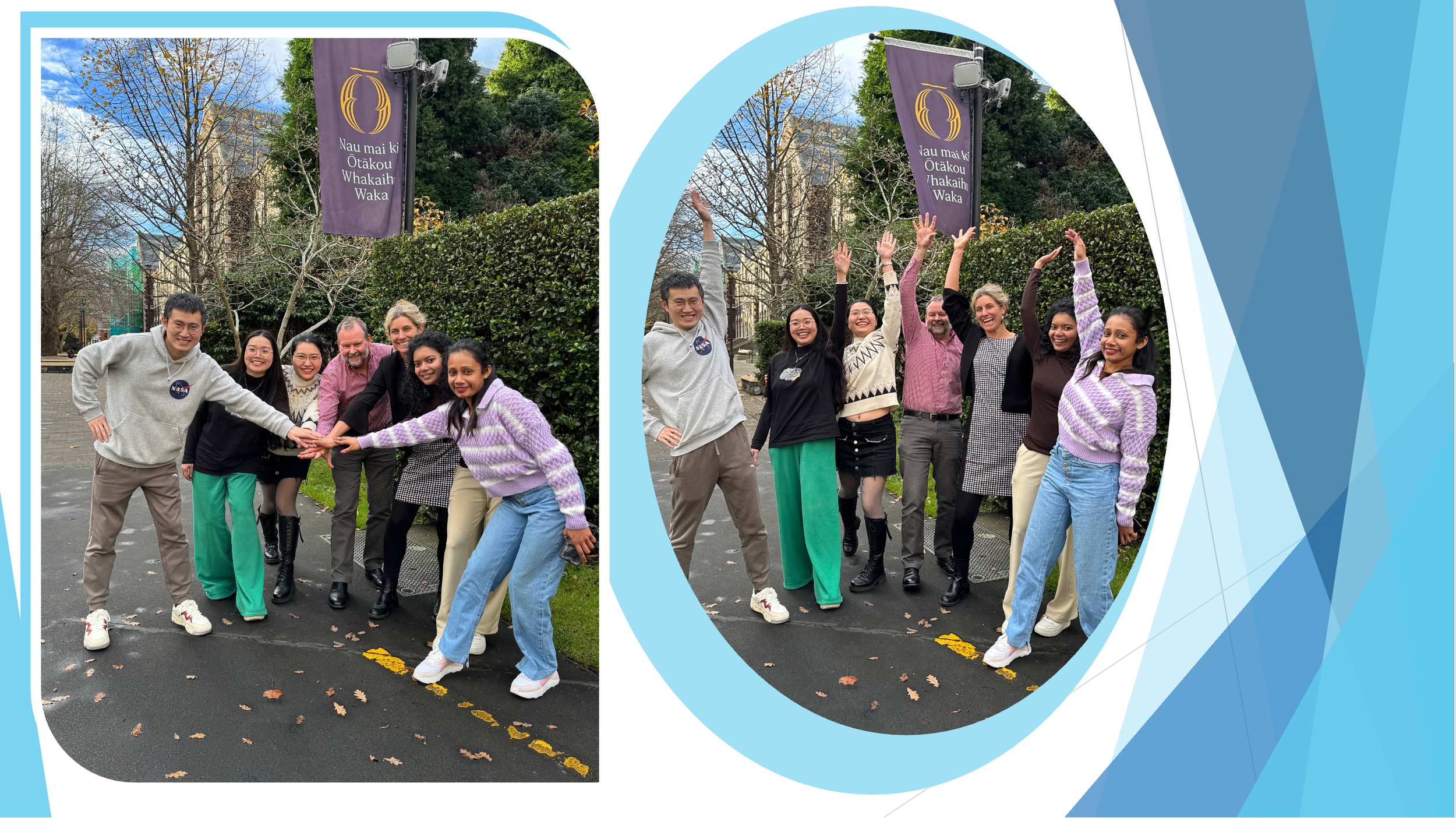
These options are not intended to capture every possible answer. Instead, they offer a starting point for a wider conversation. What kinds of behavioural change help food safety move from written expectations into team habits? Is it positive reinforcement? Visible leadership? More intuitive workspace and process design? Or is it peer accountability, psychological safety and the everyday willingness to speak up?
We hope the poll will not only collect votes, but also gather stories. Food safety culture is often best understood not through a single definition, but through the everyday situations in which it becomes visible.
Through this conversation, the Food Safety Culture Lab hopes to continue connecting research, industry practice and local experience. Our aim is to help food safety culture move from concept to action, from individual effort to team support, and from organisational practice to wider sector learning.
2026 | 06 | 07
World Food Safety Day · Food Safety Culture · New Zealand · Behavioural Leadership · Food Safety Practice · University of Otago