
Working Together with the NZFSSRC Industry Leadership Group to Strengthen Food Safety Culture
While technical systems, compliance standards and audit processes remain essential to food safety, the workshop highlighted a shared understanding that true food safety resilience depends on people. It depends on how teams communicate under pressure, how leaders set priorities, how frontline staff are supported to make safe decisions, and how organisations create conditions that allow food safety values to be translated into everyday action.
For this reason, the Food Safety Culture Lab was pleased to work alongside the New Zealand Food Safety Science and Research Centre (NZFSSRC) Industry Leadership Group (ILG) in an interactive workshop session focused on strengthening food safety culture across Aotearoa New Zealand.
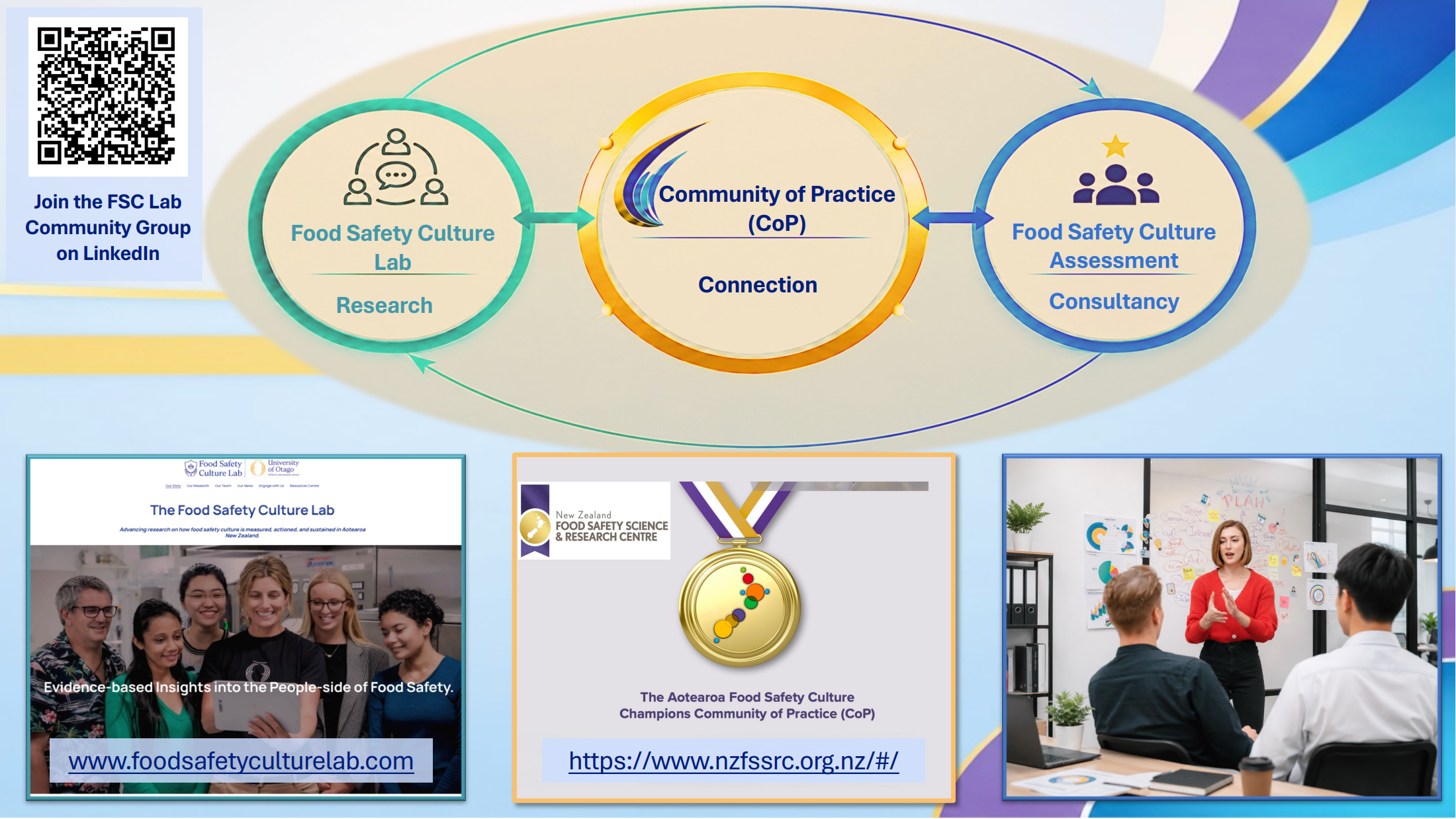
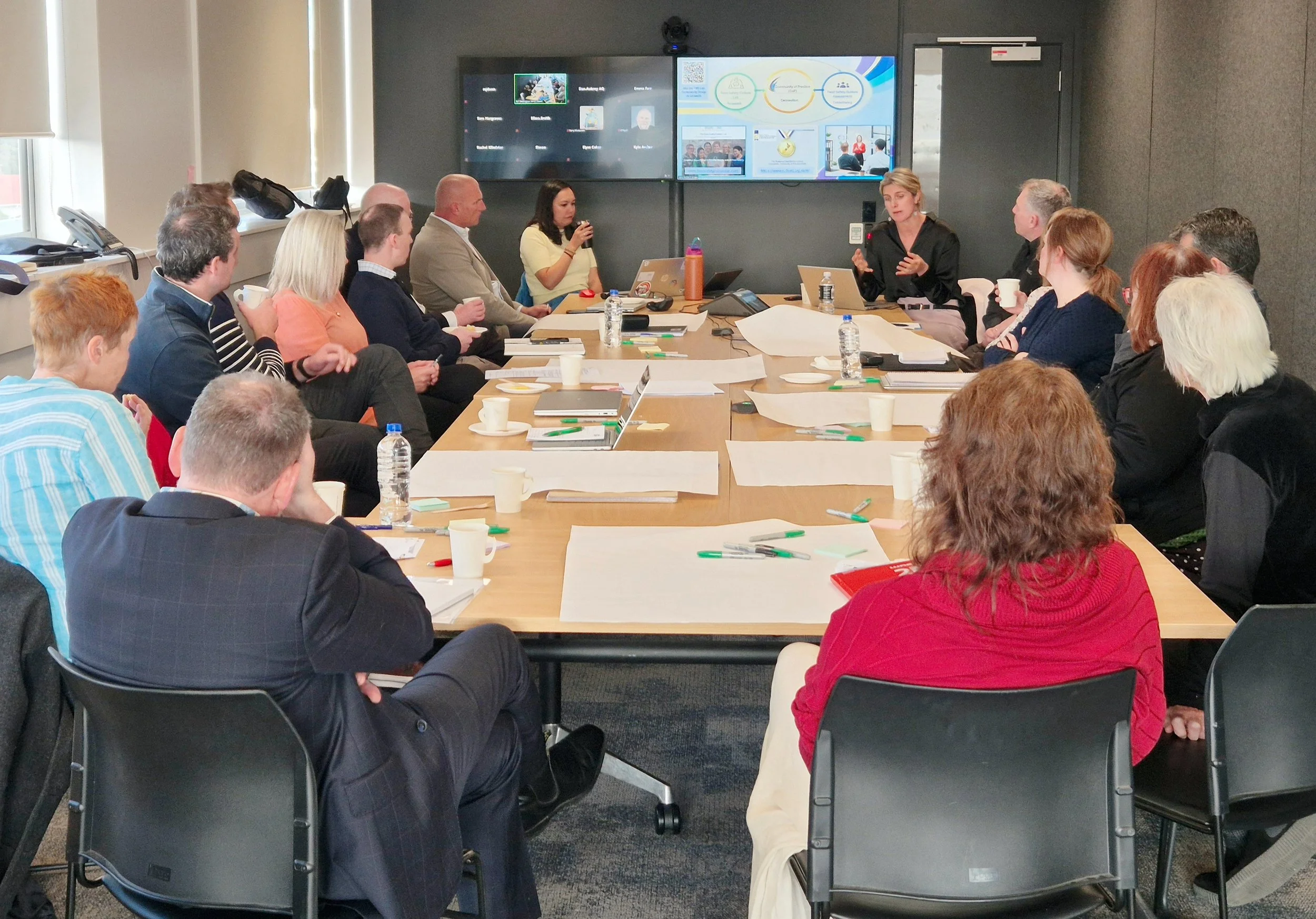
The session was facilitated by Professor Miranda Mirosa and Professor Phil Bremer from the University of Otago, together with Dr Wendy Newport-Smith, Associate Director - Operations of NZFSSRC. The ILG members represent organisations from across the dairy, meat, poultry, seafood, horticulture and testing laboratory sectors. The research team first explained how the University of Otago and the NZFSSRC have combined forces to build a coordinated ecosystem for Food Safety Culture excellence in Aotearoa.
This involves three pillars:
1. Research driven by the Food Safety Culture Lab;
2. Assessment & Diagnostics driven by a newly proposed Consultancy Service; and
3. Connection driven by the Champions Community of Practice (CoP).
💫 Insights from the Food Safety Culture Canvas
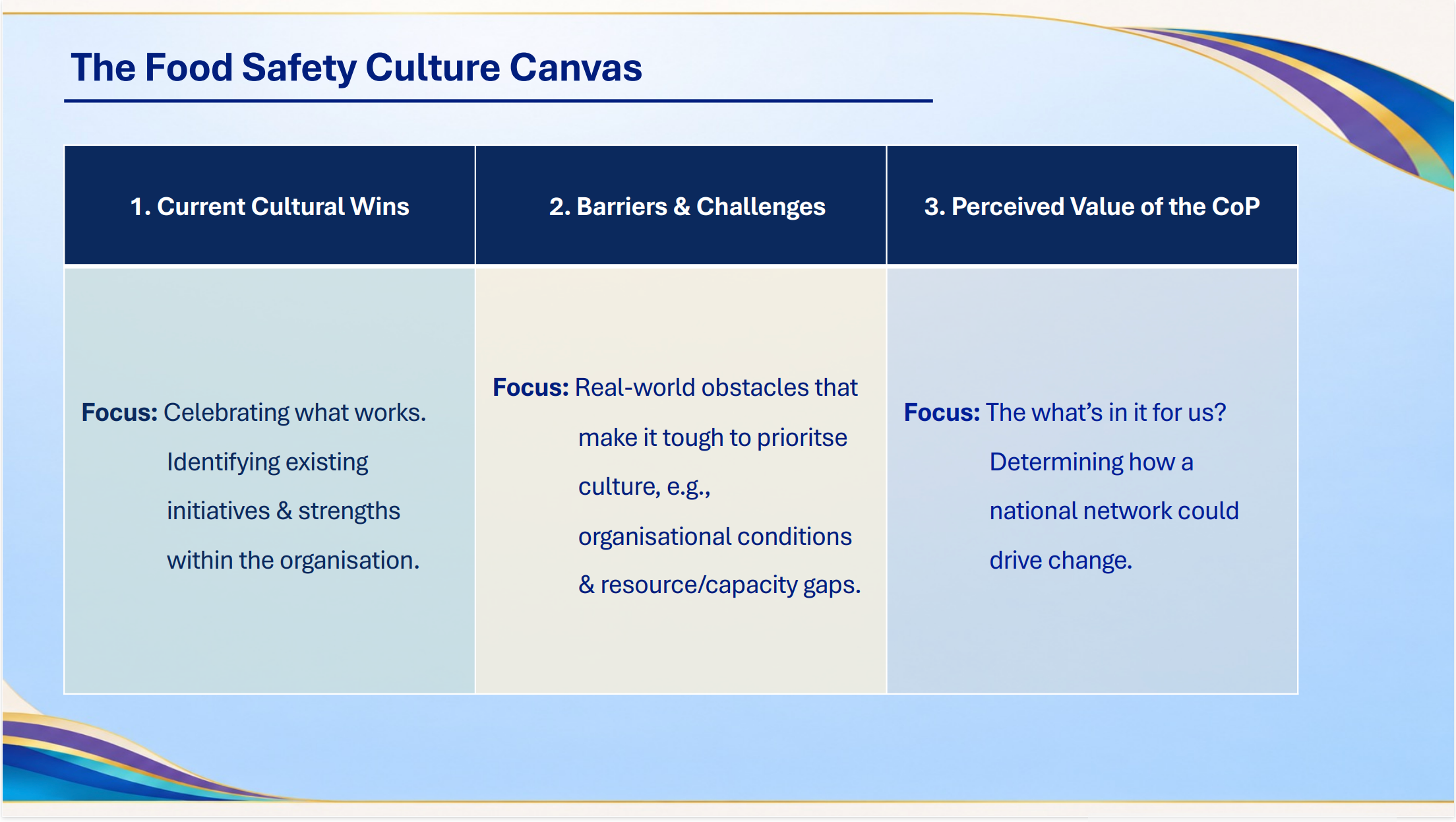
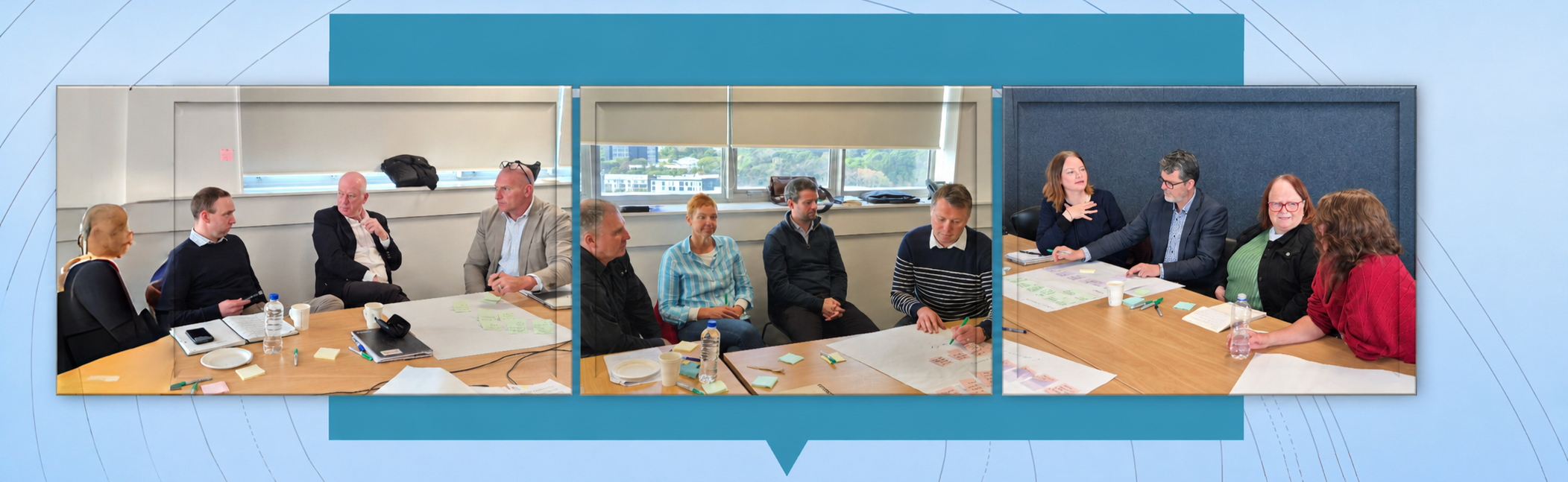
During the breakout session, participants used the Food Safety Culture Canvas to reflect on current organisational realities. This process helped identify areas where progress is being made, as well as the deeper challenges that make it tough for sites to prioritise culture over daily throughput.
Across the discussion tables, several clear themes emerged.
💫 Positive shifts already taking place
One encouraging message from the workshop was that many organisations are seeing stronger senior management support for food safety culture. Food safety is increasingly recognised as a core business priority, rather than a responsibility that sits solely with QA or technical teams.
Participants also shared examples of organisations using more targeted and positive communication to engage their teams. Rather than focusing only on rules, risks or consequences, these approaches help people understand their own role in food safety and build a stronger sense of responsibility and ownership among frontline staff.
💫 Ongoing barriers and challenges
The workshop also highlighted several ongoing challenges.
Time and cost pressures remain common barriers. During busy production periods, or when resources are stretched, it can be difficult for organisations to keep culture-building and preventative activities high on the agenda.
Cultural and communication challenges were also discussed. The food industry in Aotearoa New Zealand is supported by a diverse workforce. This brings valuable experience and perspective, but it also means that organisations need to pay close attention to language, cultural background and communication style.
Structural challenges are also important. Misaligned KPIs across different parts of the business, QA teams working in isolation, and a long-standing reliance on lagging indicators can all make it harder to strengthen food safety culture. When organisations focus mainly on incidents, complaints, non-conformances or audit findings, they may miss the earlier signals that could help prevent problems before they occur.
These challenges remind us that food safety culture cannot be built through a single training session or communication campaign. It requires ongoing alignment across goals, resources, leadership behaviours, cross-functional collaboration and support for frontline teams.
💫 The Value of a Community of Practice
The workshop also highlighted the potential value of a national Community of Practice. Participants saw this as more than a training network. It can provide a shared space where people across organisations, sectors and roles can connect, learn from each other and discuss the real challenges of food safety culture work.
Such a network can support the sharing of successful examples, but it can also create room for honest discussion about barriers, tensions and lessons learned. Importantly, a Community of Practice can help the sector develop shared language, practical tools and common ways of thinking about food safety culture.
Further details about the Aotearoa Food Safety Culture Champions Community of Practice and its official launch are available in our earlier news item.
💫 From industry feedback to Lab action
The insights generated through this workshop will feed directly into the ongoing work of Food Safety Culture Lab. The practical challenges identified by industry leaders will help shape future research directions, resources and evidence-based tools, ensuring that they respond to the real issues food organisations face.
For Food Safety Culture Lab, this kind of industry engagement is essential. Food safety culture research cannot remain at the level of theory alone, nor can it define organisational reality only through academic concepts. It needs to keep returning to the places where food safety is actually practised, to understand how people work within systems, how organisations make decisions under pressure, and how research can be translated into useful support for change.
Food Safety Culture Lab extends its sincere thanks to the NZFSSRC Industry Leadership Group for the opportunity to collaborate on this workshop. We are especially grateful to Denver McGregor, ILG Chair and representative of New Zealand King Salmon, and Dr Marie Bradley, Centre Director of NZFSSRC, for their leadership and support in making the session possible.
We also thank the industry leaders who contributed their time, practical experience and thoughtful insights throughout the workshop. Their perspectives will help shape future Food Safety Culture Lab resources, frameworks and evidence-based tools so that these outputs respond directly to the real-world challenges faced by food organisations across Aotearoa New Zealand.
Through this collaboration with the NZFSSRC Industry Leadership Group, Food Safety Culture Lab will continue to explore how food safety culture can move from an idea into action, from individual effort into collective support, and from organisational practice into shared sector learning.
2026 | 05 | 28
Food Safety Culture · NZFSSRC · Industry Leadership · Community of Practice · Food Safety Behaviour · Aotearoa New Zealand · University of Otago